
Looking for a simple, meaningful way to teach the alphabet? This Nature Letters activity for preschoolers combines literacy, sensory play, and outdoor exploration in one engaging experience.
Using natural materials like sticks, leaves, and pinecones, children build letters with their hands—turning abstract symbols into something real and meaningful.
It’s one of those activities that immediately draws children in. They naturally want to touch, move, and create.
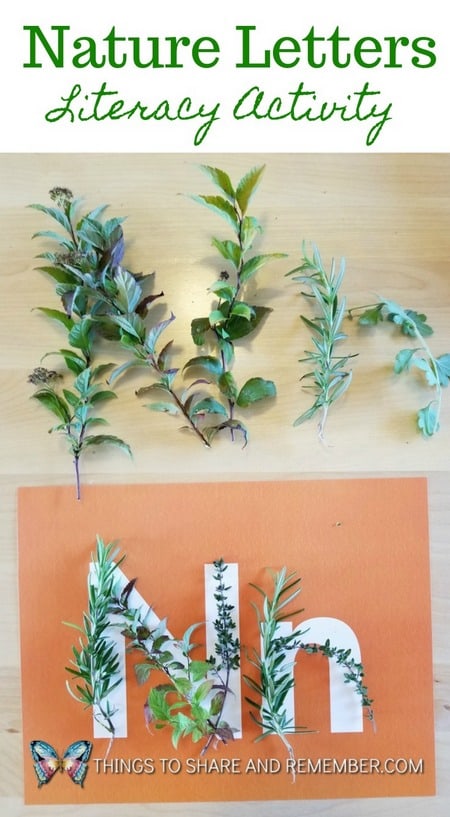

Why Nature Letters Activity for Preschoolers Works
Hands-on, open-ended activities help children learn more deeply than worksheets (which are not developmentally appropriate). When children physically build letters, they are:
- Strengthening fine motor skills
- Practicing letter recognition
- Developing early writing skills
- Engaging in sensory exploration
- Connecting learning to the natural world
Activities like this also support early literacy development through play-based experiences, which are especially effective in preschool years.
If you’re working on early literacy skills, you might also love our Dragons Love Tacos activities or these hands-on alphabet activities.
Supplies for Your Nature Alphabet Activity
You only need a few simple materials:
- Sticks and twigs
- Leaves or flower petals
- Pinecones or acorns
- Small rocks
- Alphabet cards (optional for guidance)
- Tray or table space
👉 Tip: Keep materials in small baskets or containers to create an inviting setup.
How to Set Up Nature Letters Activity for Preschoolers
This activity works beautifully as a tabletop invitation or outdoor exploration.
1. Gather Natural Materials
Collect items from your outdoor space or go on a nature walk together. The children could select plants they wanted to use to arrange and form their letters.
2. Provide Letter Inspiration
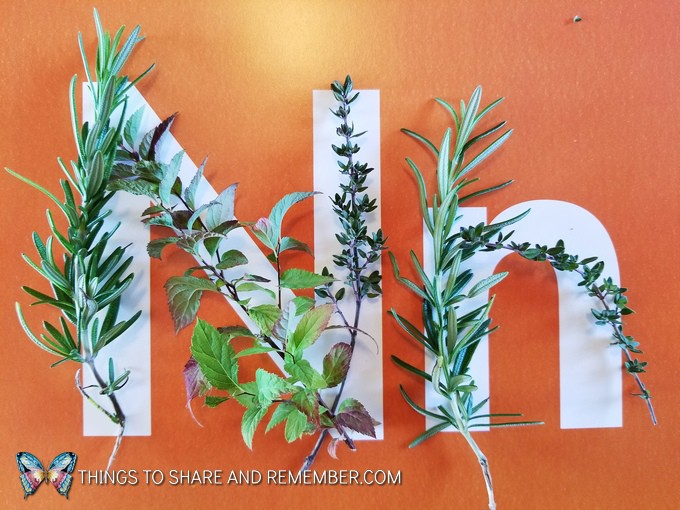
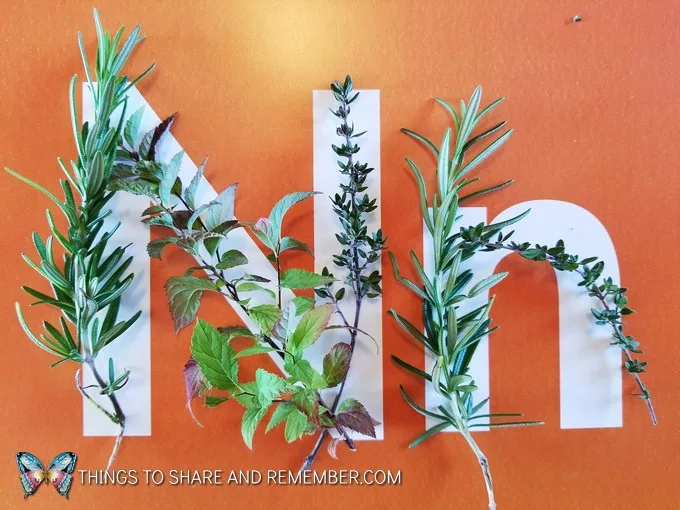
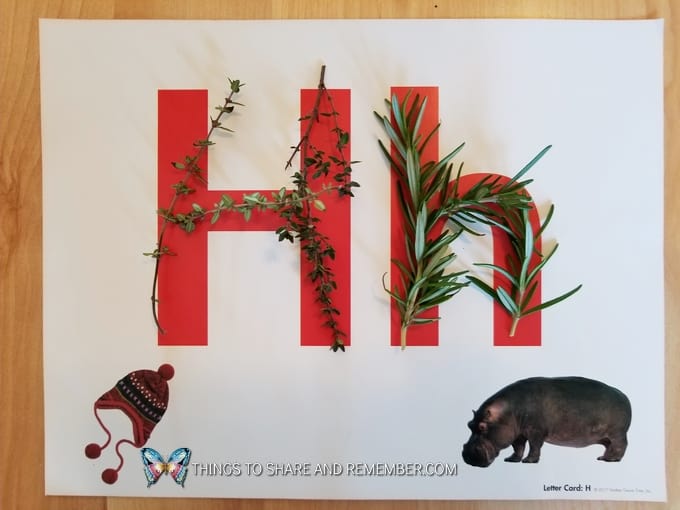
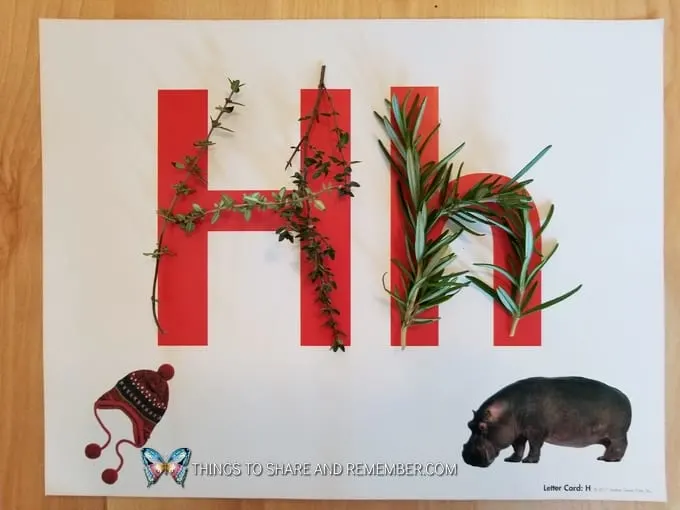
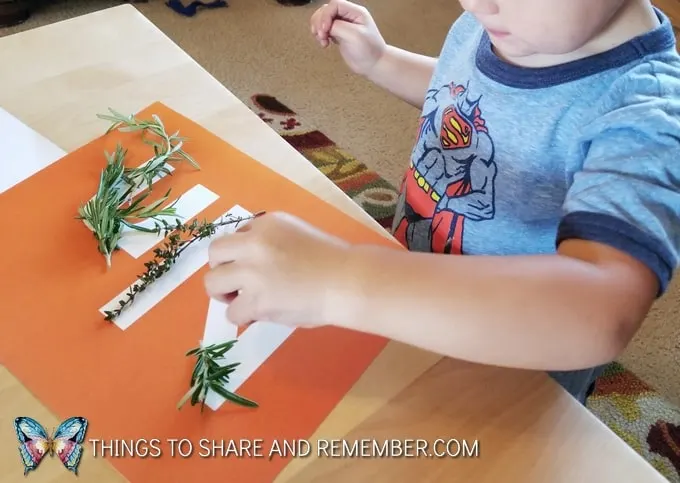
Offer alphabet cards or encourage children to start with the letters in their name. My group is young so I used the alphabet cards from Experience Curriculum as templates to create the letters.
3. Build the Letters
Invite children to arrange materials into letter shapes. Simply setting up the environment with resources ready to explore is the invitation!
4. Let Them Explore
There’s no “right way.” Some children will carefully form letters, while others will experiment freely—and both are valuable. Be present, observe and naturally engage with children without telling them what to do or insisting on guiding their work. See what happens, you may be suprised!
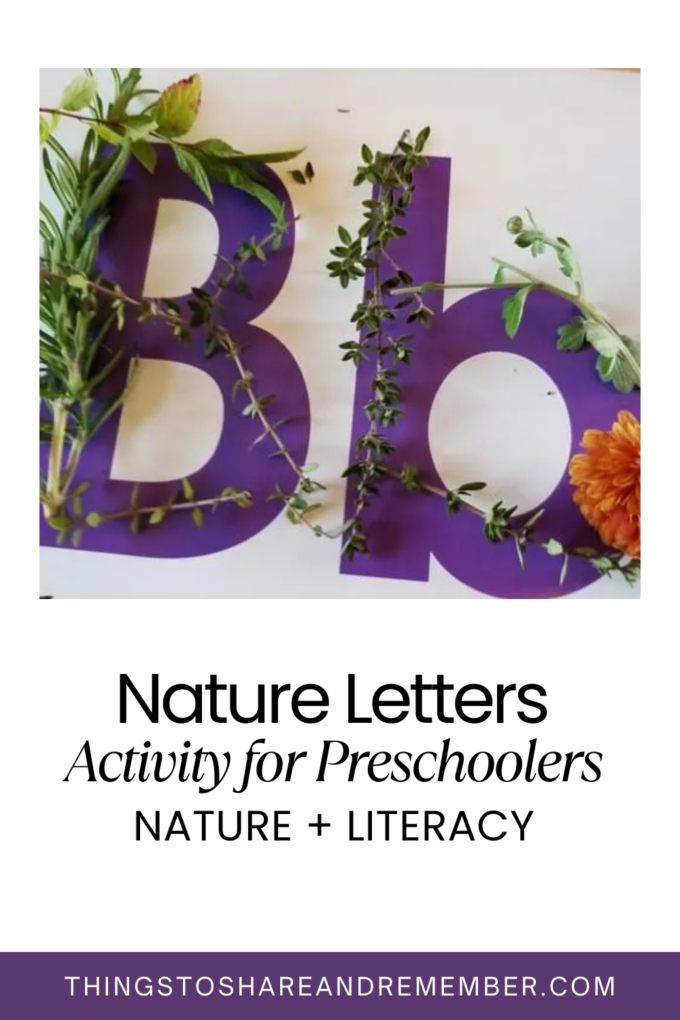
What Children Learn Through Nature Letters
This simple activity supports multiple areas of development:
Literacy Skills
Children begin recognizing and forming letters in a hands-on way.
Fine Motor Development
Placing and adjusting small objects strengthens hand muscles needed for writing.
Problem Solving
Children figure out how to create shapes using different materials.
Creativity
There’s no single correct outcome—each letter looks different.
Nature Connection
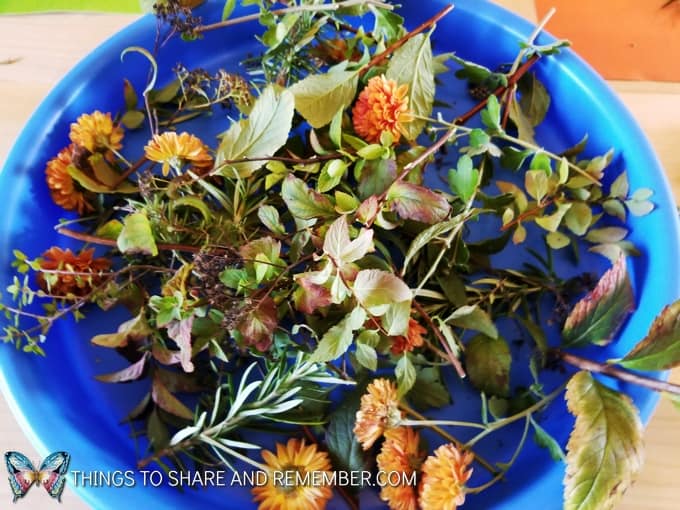
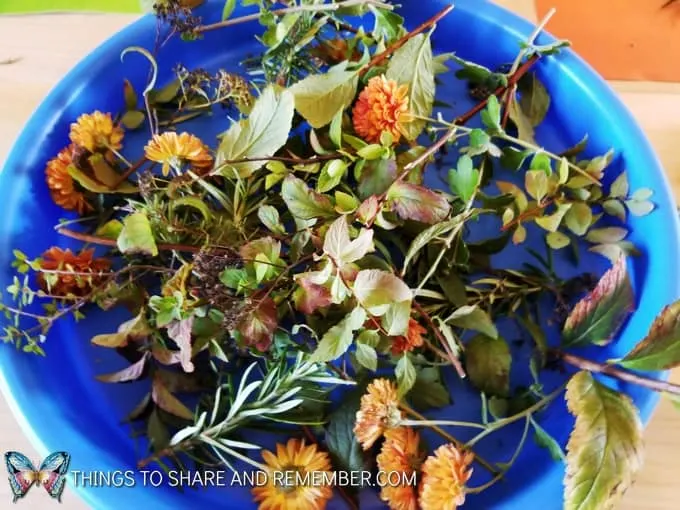
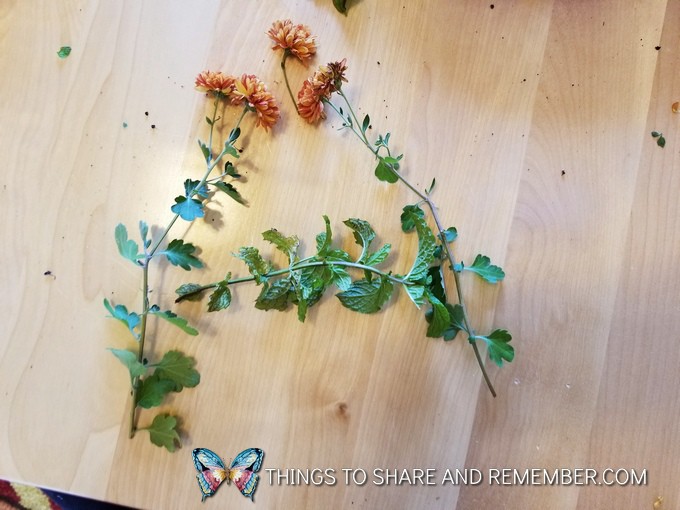
Children engage with real-world materials, building awareness of their environment. We collected plants from our garden and yard for our nature letters activity including rosemary, mint, thyme, spirea, and mums.
Take It Outdoors
Nature letters don’t have to stay at the table.
Try this activity:
- On a sidewalk or patio
- In a garden space
- During a nature walk
- At a park or playground
Outdoor learning experiences like this encourage exploration and curiosity while supporting early academic skills.
Extend the Learning
Once children are comfortable, expand the activity:
Make a Nature Letter Book
Glue letters onto paper and create a class alphabet book. Make a simple book by stapling pages together or making a paper bag book.
Spell Names or Words
Encourage children to build their name or simple words. Add name cards so the children can explore the letters of their names. Further explore name writing with Dot Art Name Paintings or Dirt Names.
Alphabet Hunt
Look for letter shapes in nature (branches, shadows, rocks). Going for a walk around the neighborhood, property or play space and looking for letters is a fun way to notice!
Add Writing Practice
Pair with tracing cards or printable alphabet mats.
Why This Activity Works So Well
Sometimes, the simplest invitations are the most engaging.
Children are naturally drawn to loose parts. When those materials come from nature, the experience becomes even richer—combining play, creativity, and early literacy in a meaningful way.
It’s also a great way to invite children to participate who may not typically choose writing or literacy centers. The natural materials make it feel different, new, and interesting.
Simple, Meaningful, and Engaging
Nature letters are a perfect example of learning through play.
With just a tray of materials and a little curiosity, children can explore the alphabet in a way that feels natural, hands-on, and fun.
Older children could make the letters freeform, on the table.
We took turns with the letter cards so they could try different letters.
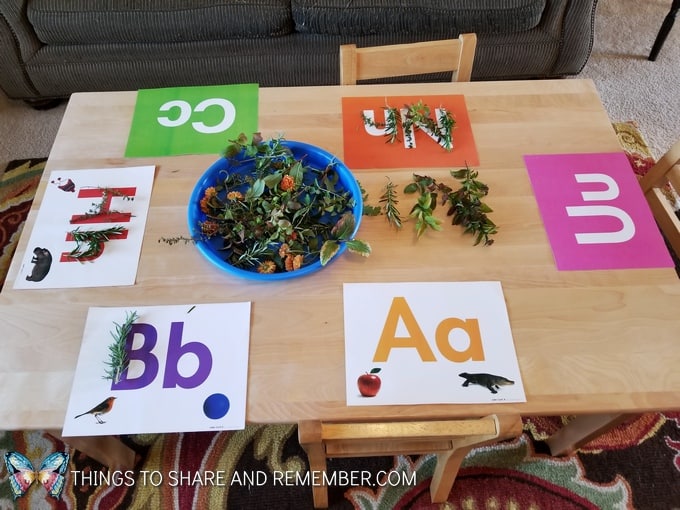
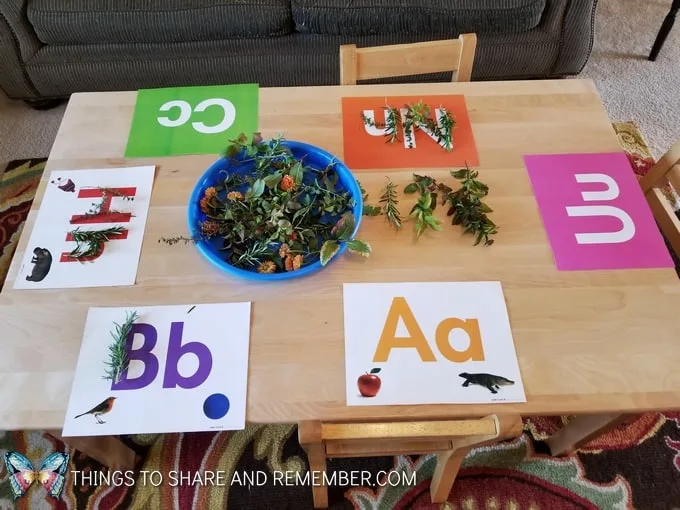
Such a beautiful way to practice making letters!
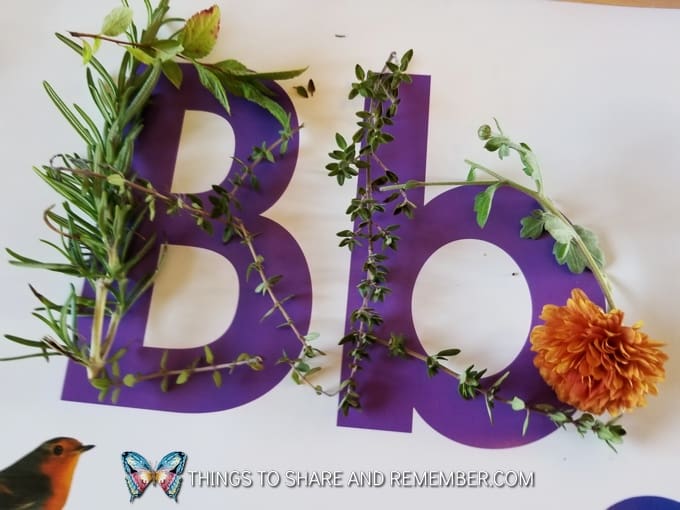
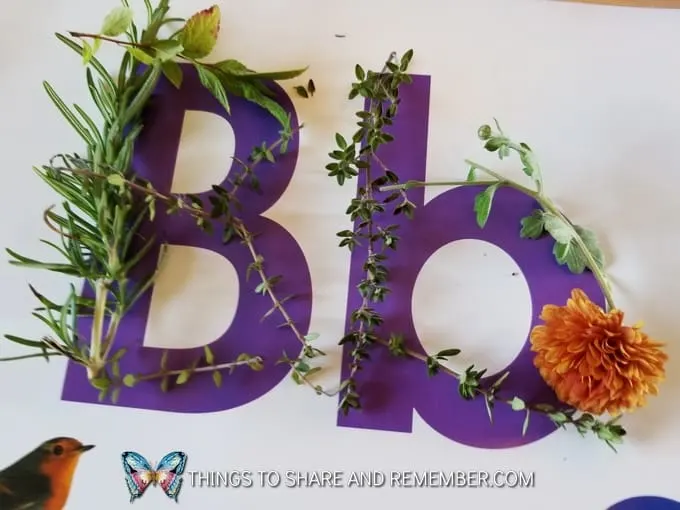
Using fresh cut herbs and plants is also a sensory experience. This little guy said, “This smells good!” It’s rosemary and he’s right, it smells great!
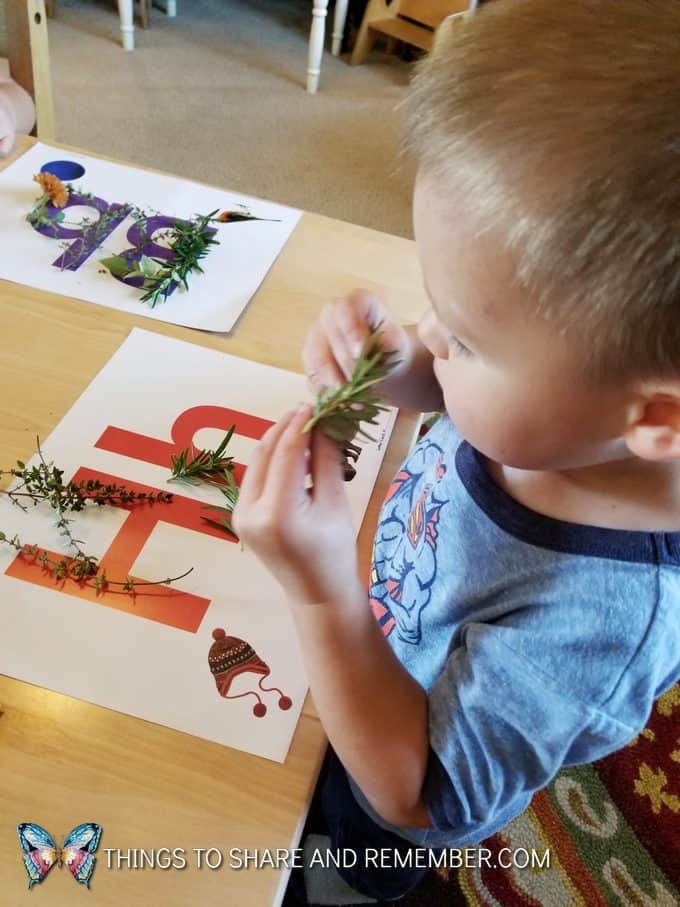
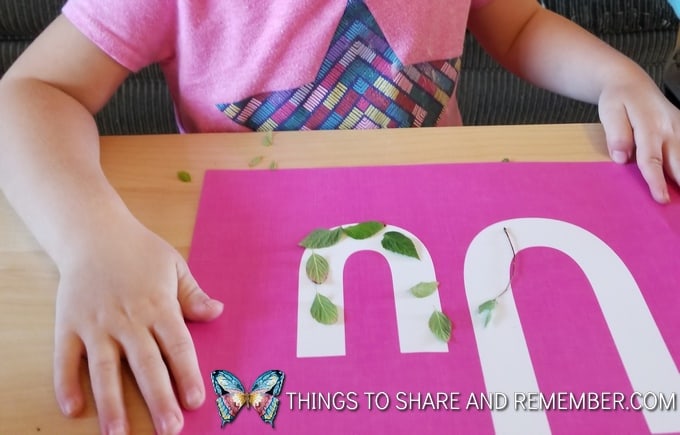
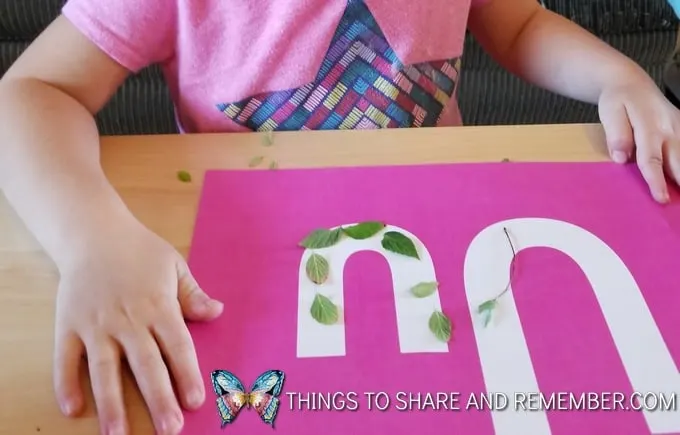
There have been times when I set up an invitation to learn and children are just not that into it but that was not the case with nature letters. They were very interested and spent 10-15 minutes on creating letters.
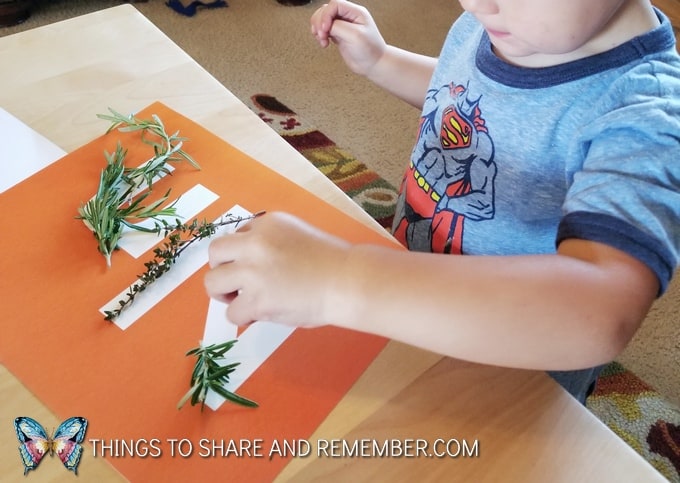
While our tabletop literacy activity was short-lived, you could also create a nature letter book by gluing down the sticks, leaves, pine needles, branches or acorns into a booklet.
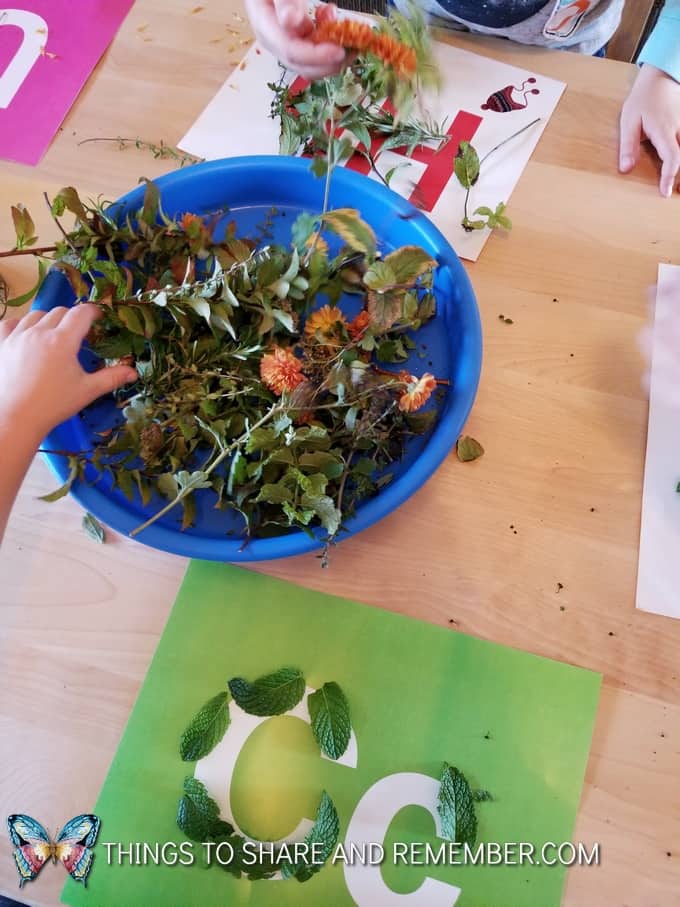
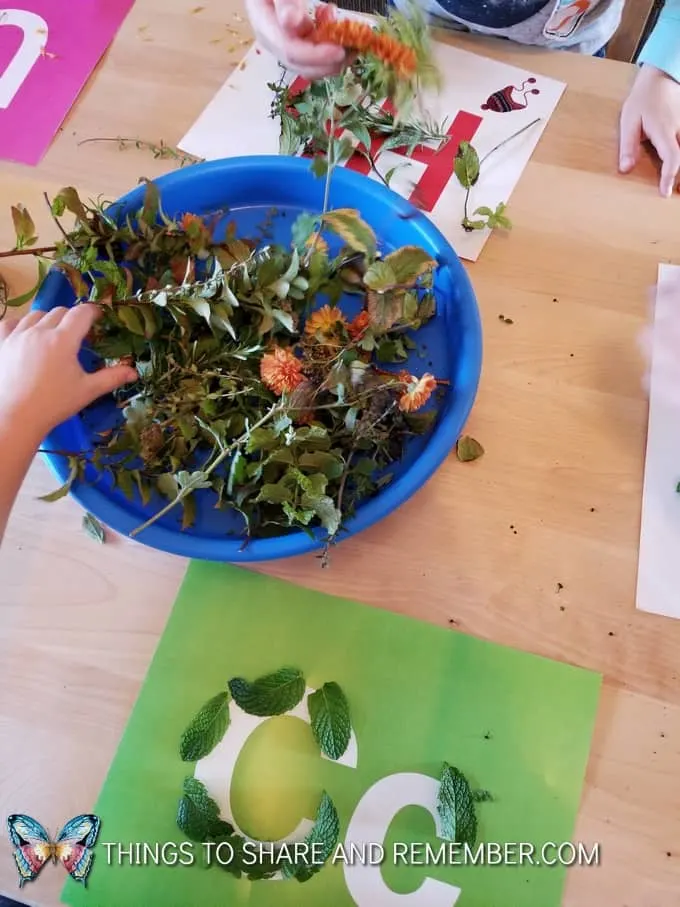
All you need is a tray of plant stems and alphabet letters.
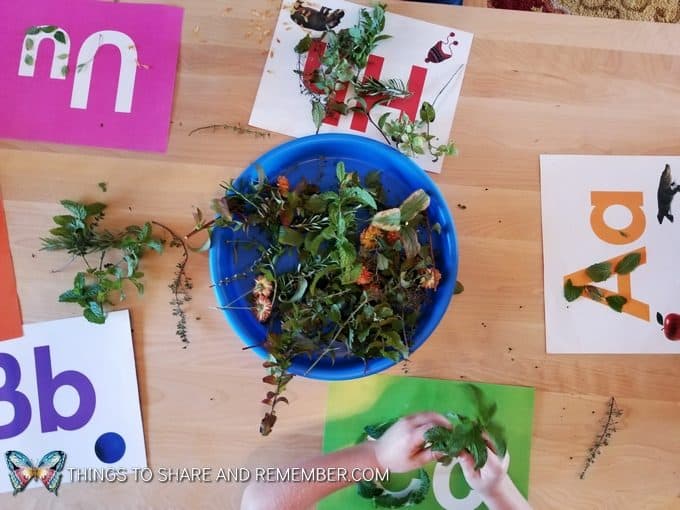
Nature letters is an example of hands-on learning at it’s best!
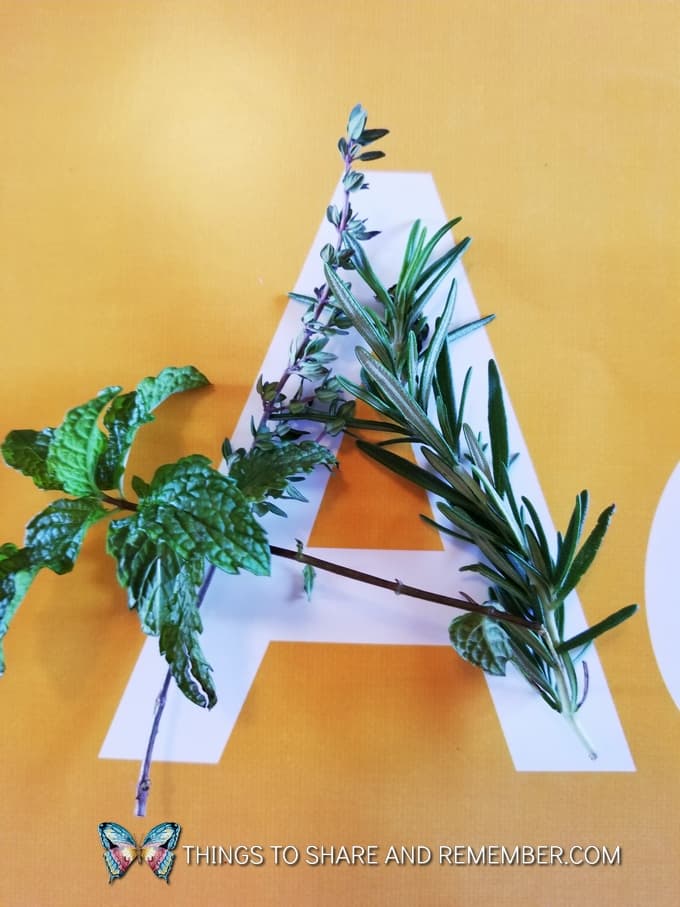
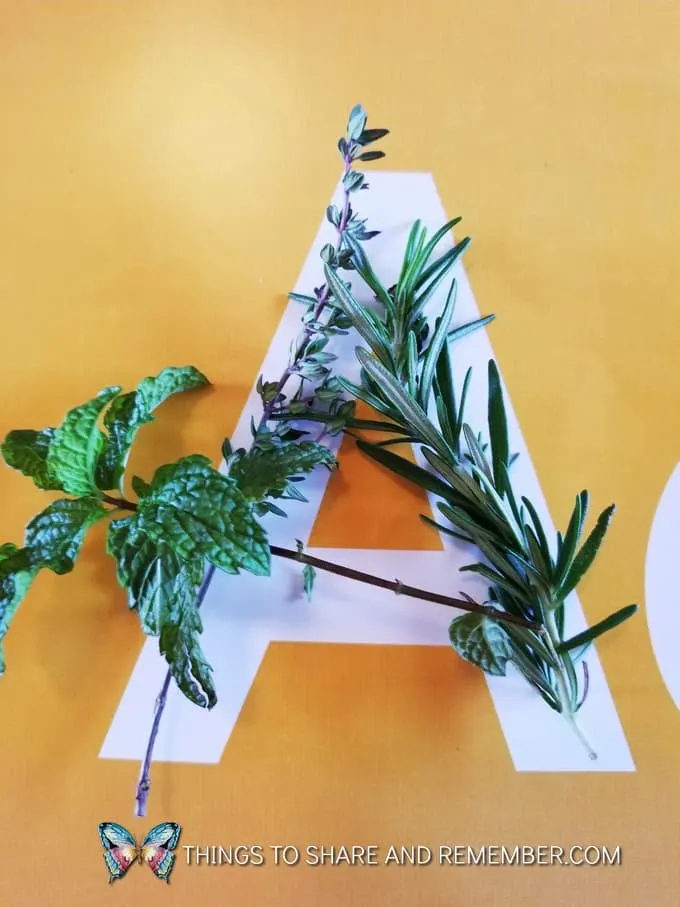
Take this wonderful activity outdoors too, if desired, as it can be a little messy.
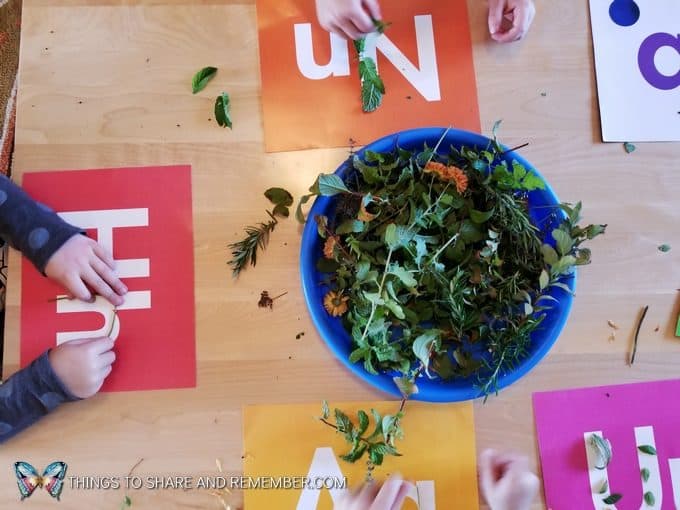
Literacy, nature, fine motor development and sensory play all help children learn in an appealing and natural way, adding to their knowledge of the alphabet and world around them.
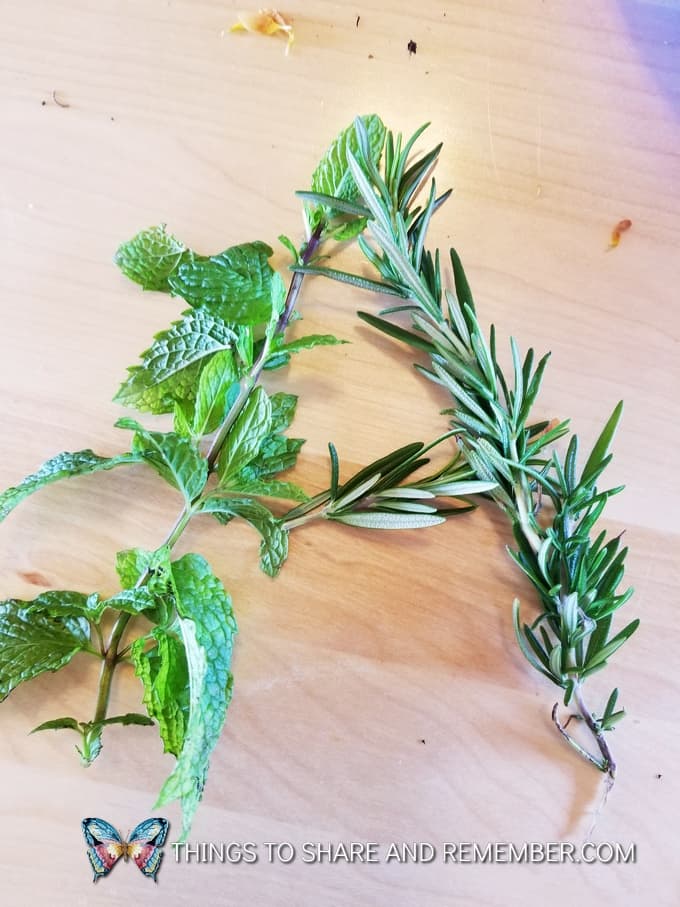
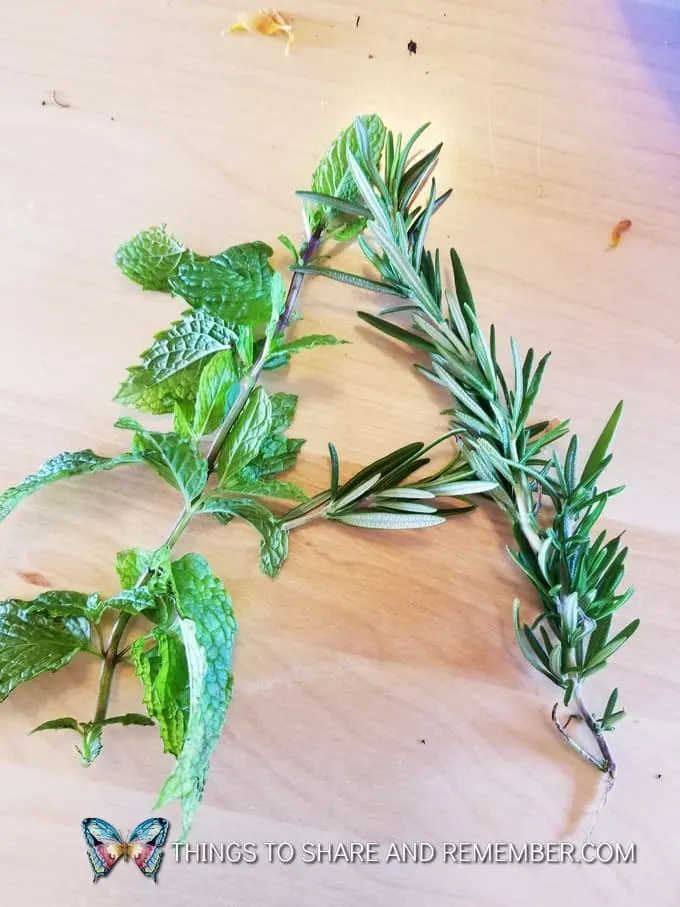
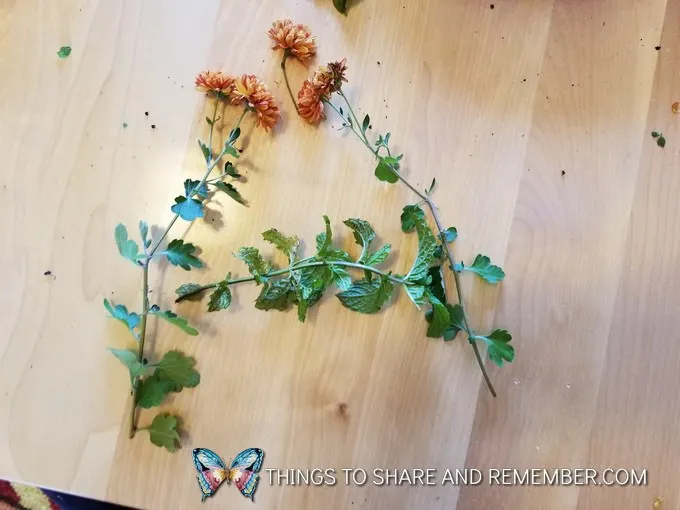
Have you ever seen such beautiful letter A’s? Love this idea for setting up a preschool literacy activity and allowing for independent exploration of natural materials and the alphabet.
More Preschool Nature Activities
- Nature-Inspired Mark-Making Cards & Fine Motor Activity
- Loose Parts Nature Designs
- Nature Playdough
- Nature Discovery Bottles
Find out more about my favorite way to teach young children:
Facebook | Instagram | Pinterest
I received curriculum from Experience Early Learning for honest and authentic stories resulting from my daily experiences using the curriculum. As a user of Experience Preschool for many years, I am pleased to share quality educational experiences. #sponsored #ExperienceEarlyLearning