
Children learn best through hands-on experiences, and a garden dirt sensory bin for preschool is the perfect way to explore planting when outdoor gardening isn’t possible. During a wet spring, we brought gardening indoors and created a planting sensory bin filled with soil, pots, and plants. It quickly became one of the most popular activities in our classroom. While outdoor gardening offers real-life experiences, an indoor garden sensory bin for preschoolers gives children the chance to dig, plant, and explore anytime. After a few days indoors, we moved our bin outside to extend the experience even further.


Why Try a Garden Sensory Bin?
A planting and garden dirt sensory bin supports multiple areas of development while feeling like pure play.
Children naturally engage in:
- Digging and scooping (fine motor development)
- Filling and dumping (cause and effect)
- Pretend planting and arranging (imaginative play)
- Talking about plants and nature (language development)
There’s something irresistible about digging in real dirt. It invites children who might not always choose sensory play to join in and explore.
Supplies for a Garden Dirt Sensory Bin
Creating this sensory bin is simple and affordable. You can easily adapt it with materials you already have.
Basic materials:
- Potting soil
- Small flower pots
- Silk or artificial plants
- Child-sized gardening tools
- Rocks or pebbles
- Vegetable counters or small garden-themed toys
- Tray or bin for setup
Optional additions:
- Child sized gardening gloves
- Water for pretend watering
- Real herbs or starter plants
- Spoons, scoops, or cups
Many of our items came from budget-friendly stores like Dollar Tree and craft supplies from Michaels, making this an easy activity to put together.
No products found.


How to Set Up a Planting Sensory Bin
Set up your garden dirt sensory bin in a shallow bin or tray. Place soil in the container and arrange pots, plants, and tools nearby.
A few simple tips:
- Use smaller pots to limit how much dirt gets dumped
- Provide a variety of materials to encourage different types of play
- Add a tray underneath for easier cleanup
- Start indoors, then move outdoors if possible
This flexibility helps make the activity manageable while still allowing for meaningful exploration.
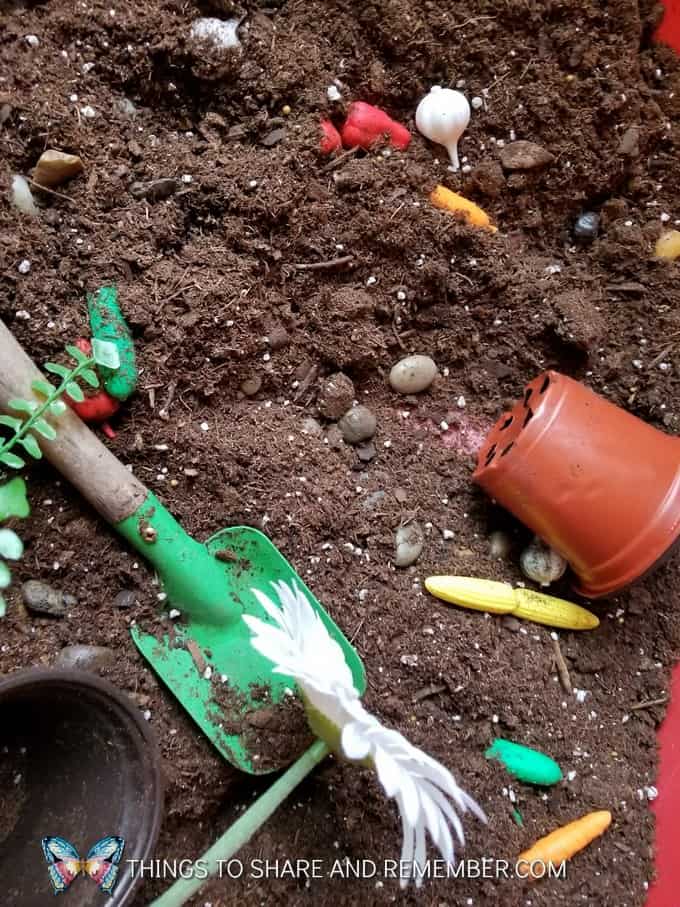
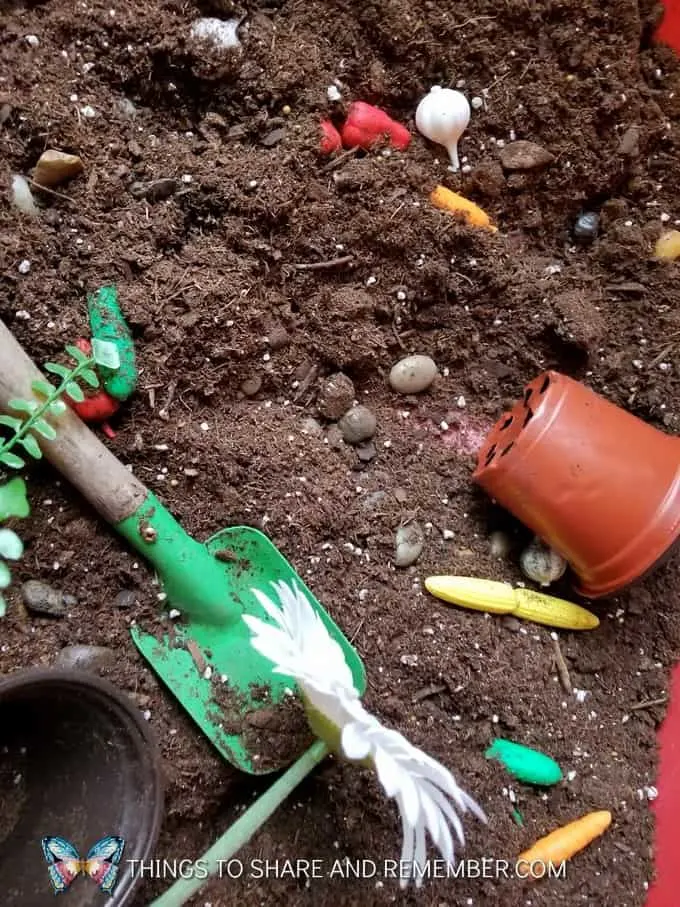
It wasn’t just the girls interested in this bin even though there were flowers involved. Everyone played here.

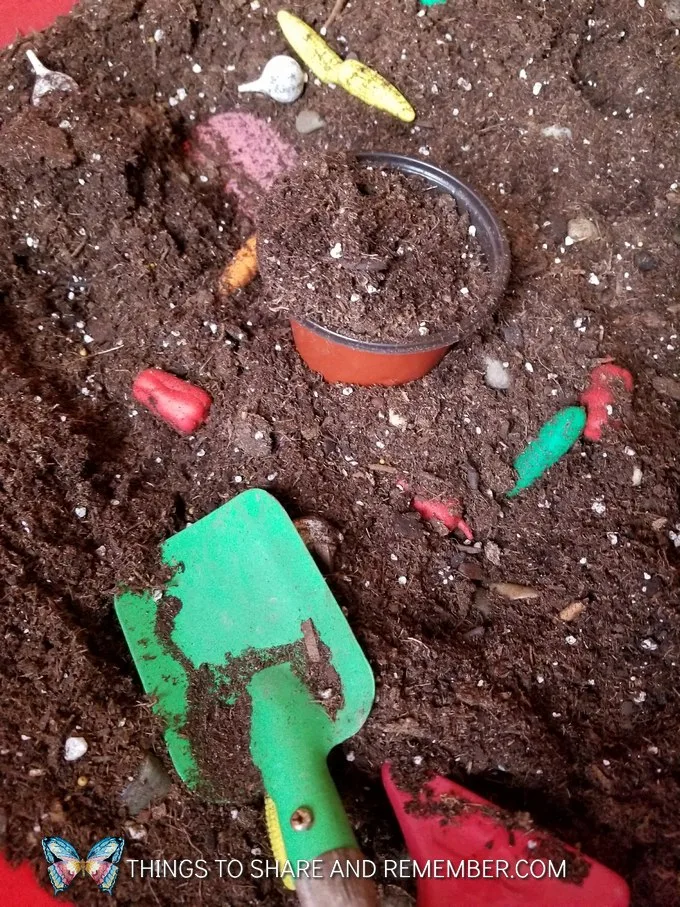
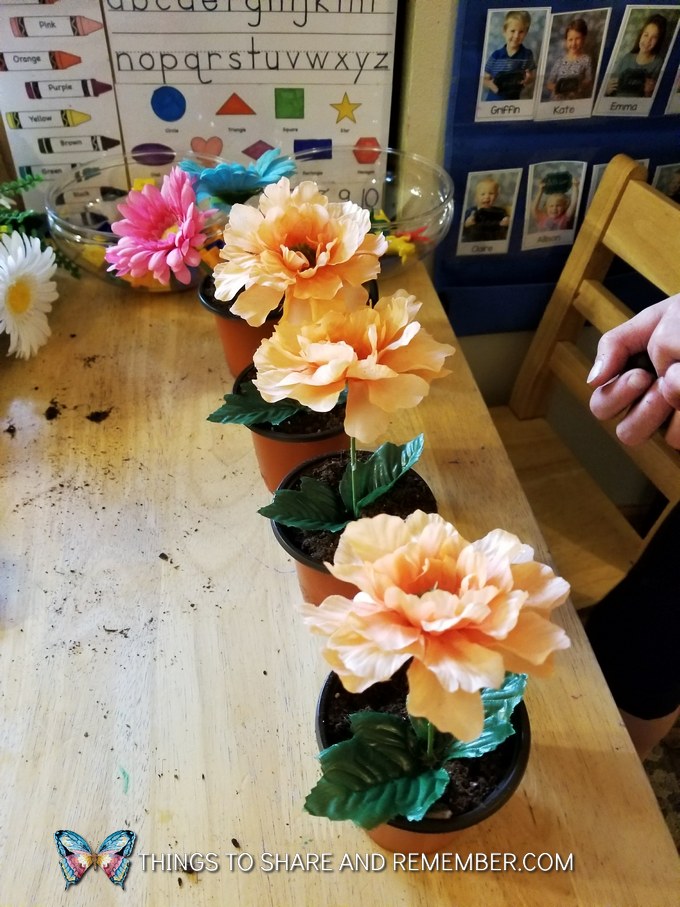
I recommend small pots which mean less dirt should be spilled if one is dumped!

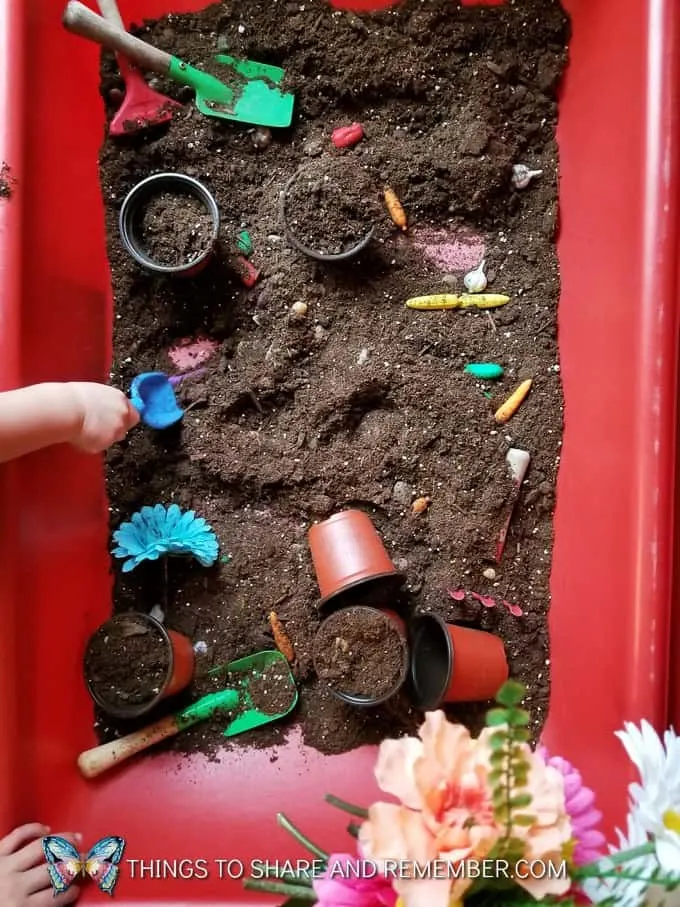
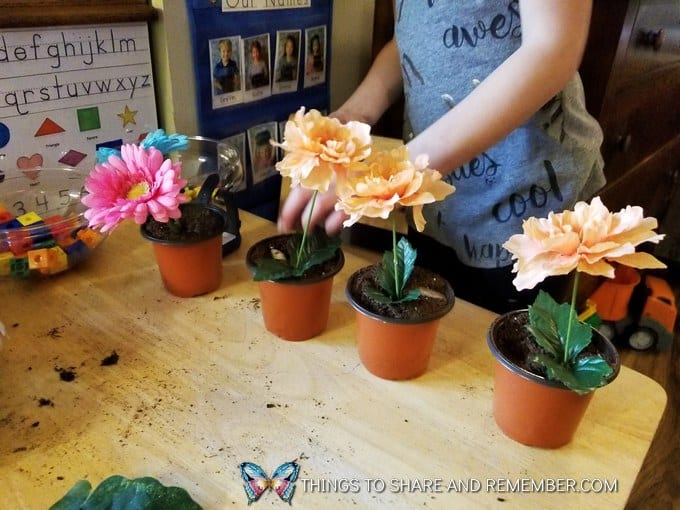
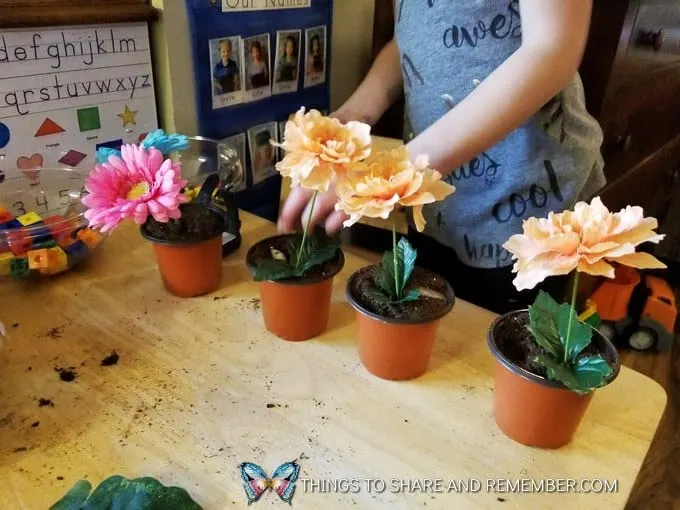
A variety of items creates interest and options for playing.


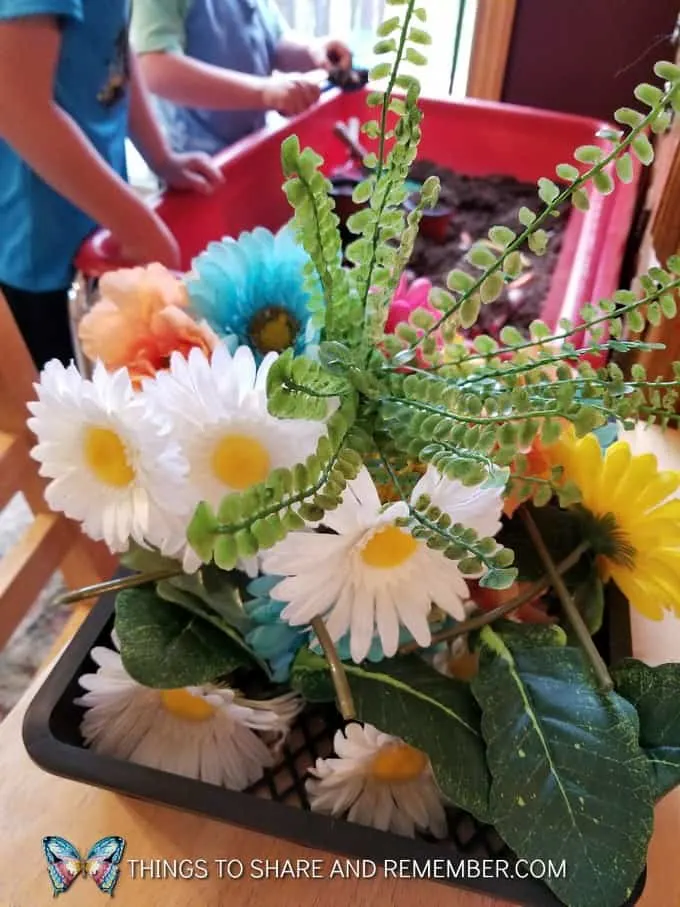
Don’t forget the greens! They really liked this fern type plant.


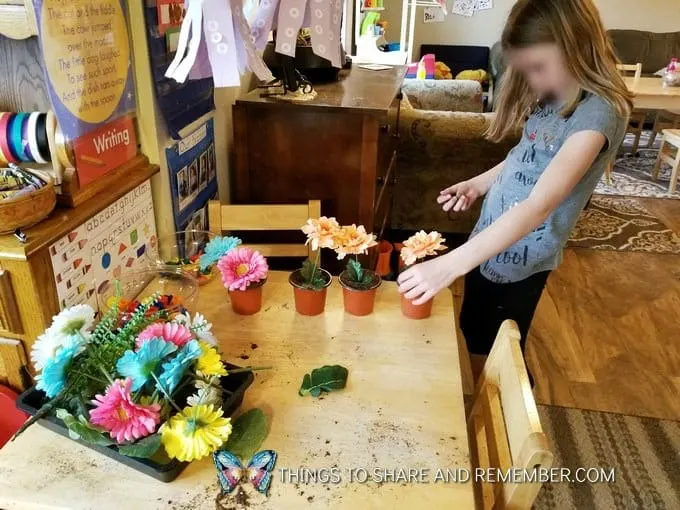
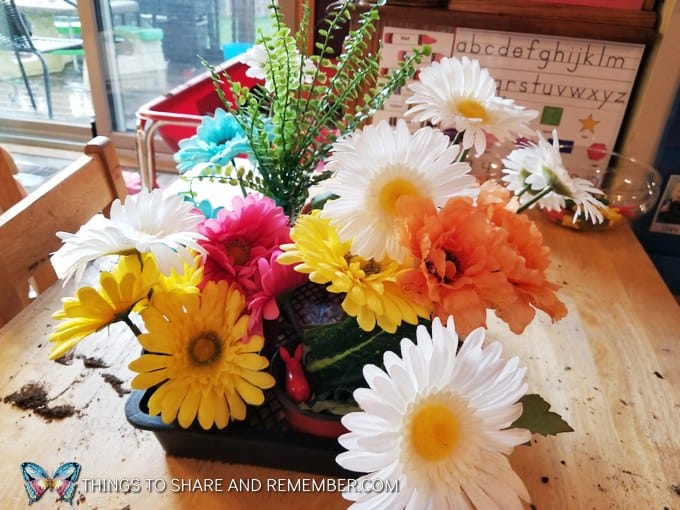
Here’s our flower collection:

Even the school agers were all over this activity after school!

What Children Learn Through Garden Sensory Play
This activity goes beyond sensory fun. A garden dirt sensory bin for preschoolers builds important early learning skills.
Fine Motor Skills
Scooping soil, picking up rocks, and placing plants strengthens hand muscles needed for writing.
Sensory Exploration
Children experience different textures like soft soil, smooth rocks, and delicate leaves.
Early Science Concepts
Children begin to understand planting, growth, and caring for living things.
Social Interaction
Even children who don’t usually gravitate toward flowers or gardening materials become engaged. This was a popular activity for everyone, including older school-age children.
Encouraging Open-Ended Play
One of the best parts of a planting sensory bin is how open-ended it is.
Children may:
- Pretend to plant a garden
- Fill and empty pots repeatedly
- Sort rocks and materials
- Create their own garden designs
Adding different types of greenery, like ferns or leafy plants, increases curiosity and keeps the experience fresh.

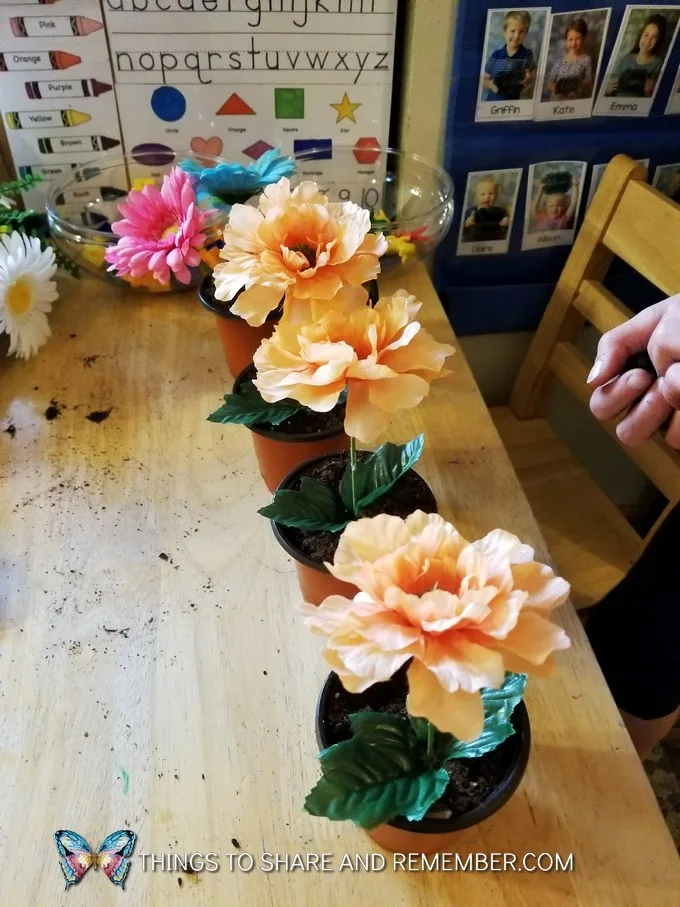
As you can see, this is a little messy. Fun though!
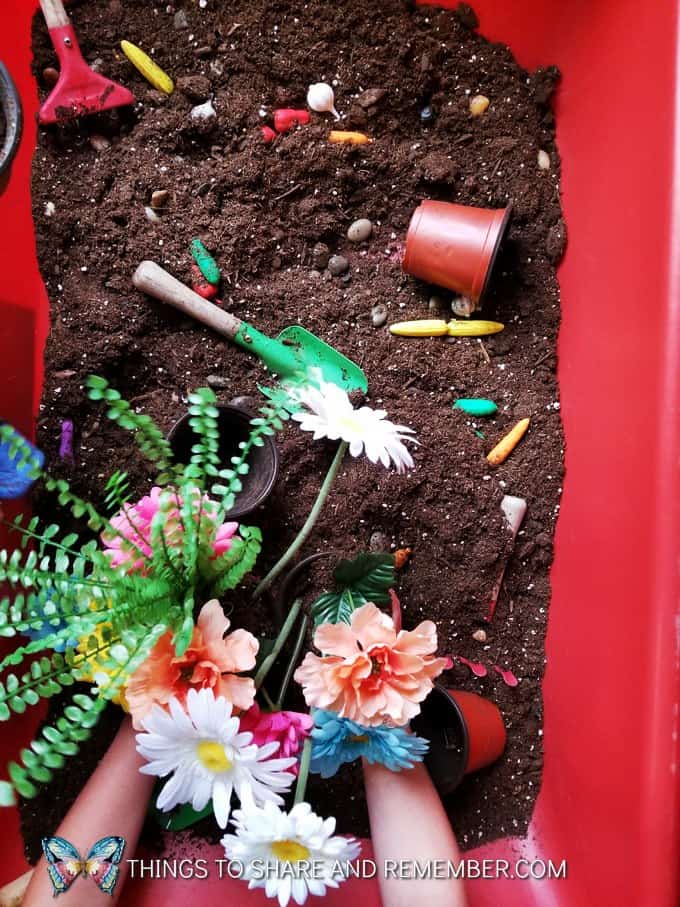

Managing the Mess (Because There Will Be Some!)
Yes, this activity can get messy, but that’s part of the learning.
To make it manageable:
- Place a mat or sheet under the bin
- Set clear expectations for keeping soil in the bin
- Offer brushes or small brooms for cleanup
- Move the activity outdoors when possible
Even with the mess, the engagement and learning make it worthwhile. See the learning in action and know the mess can and will be cleaned up later.
Extending the Garden Sensory Bin Activity
Once children are engaged, you can extend learning even further:
- Add real seeds to plant in pots
- Read books about gardening and plants
- Observe real plants growing over time
- Create a small outdoor garden to connect the experience
- Make seed mosaics art
- Explore parts of a bean plant
This helps bridge sensory play with real-world learning.
No products found.
A Simple and Meaningful Preschool Activity
Our garden dirt sensory bin was a huge success. Children returned to it again and again, exploring, creating, and learning through play.
Sometimes the simplest activities, like digging in dirt, create the most meaningful learning experiences.
Happy planting! 🌱