
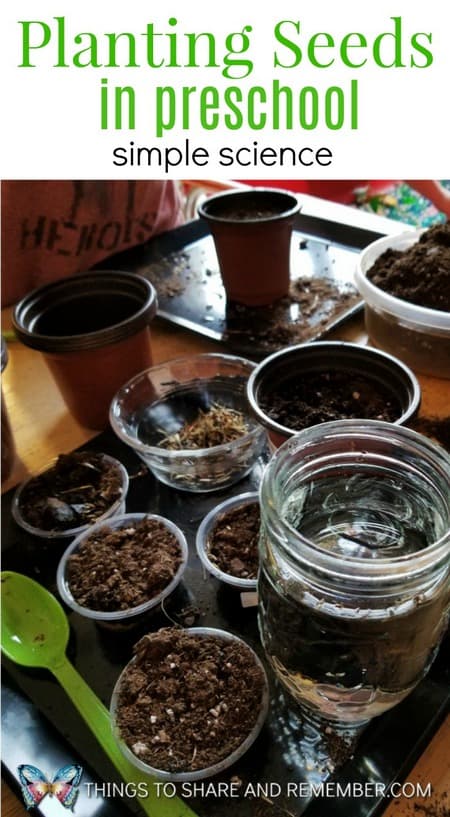
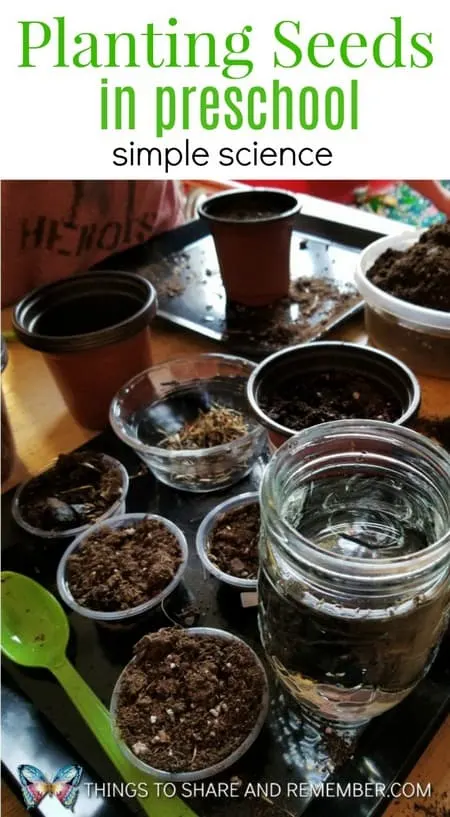
It’s that time of year again to plant some seeds! Planting Seeds in Preschool is such a wonderful hands-on experience for children! I love that it doesn’t have to be a big production to be meaningful. Just a small bean seed or a little container for soil and grass seeds! Both of these offer quick and exciting results.
Why Planting Seeds is Powerful in Early Childhood
Planting seeds with preschoolers is more than a spring activity—it’s a meaningful science experience that builds real understanding.
When children plant seeds, they begin to explore:
- Cause and effect (water + sun = growth)
- Life cycles and change over time
- Responsibility and care
- Observation and patience
Hands-on gardening activities help children connect to the natural world while strengthening skills in literacy, math, and science .
And best of all? It’s simple, engaging, and memorable.
What Children Learn from Planting Seeds
Planting seeds in preschool supports multiple areas of development:
🌿 Science & Discovery
Children learn how plants grow and what they need to survive. This introduces early concepts like roots, stems, and growth stages .
✋ Fine Motor Skills
Scooping soil, pouring water, and placing tiny seeds builds hand strength and coordination.
🧠 Language & Vocabulary
Words like seed, sprout, roots, soil, and grow become meaningful through real experiences.
❤️ Social-Emotional Growth
Caring for a plant teaches patience, responsibility, and pride.
Planting Seeds in Preschool
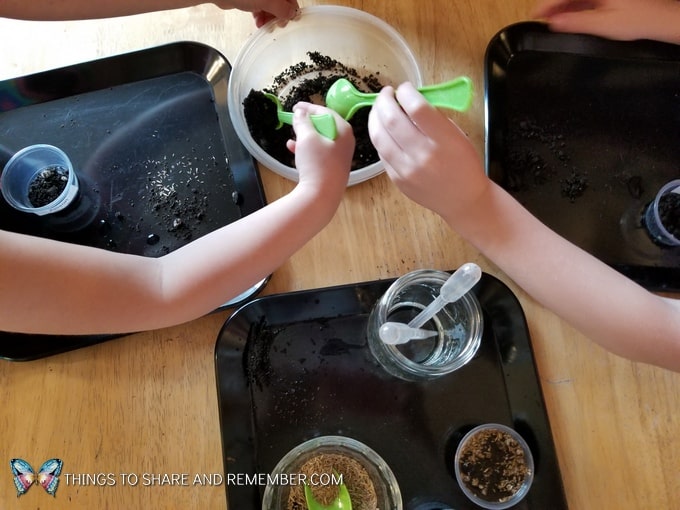
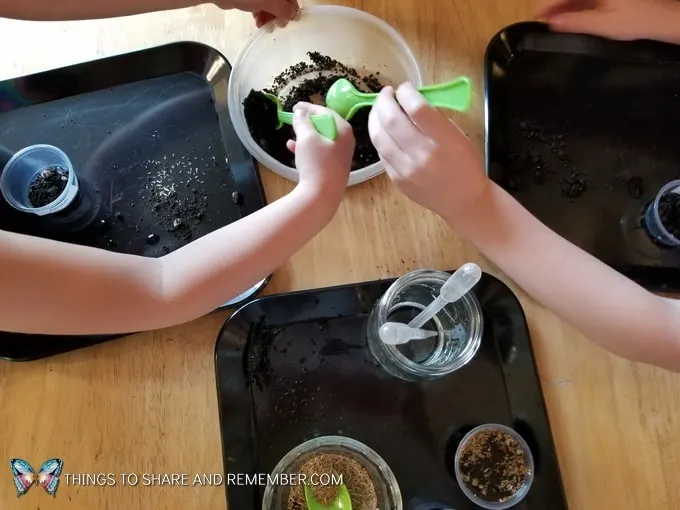
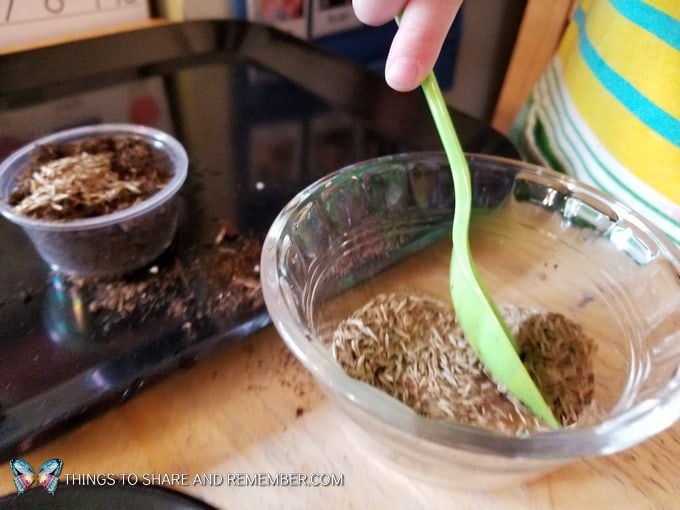
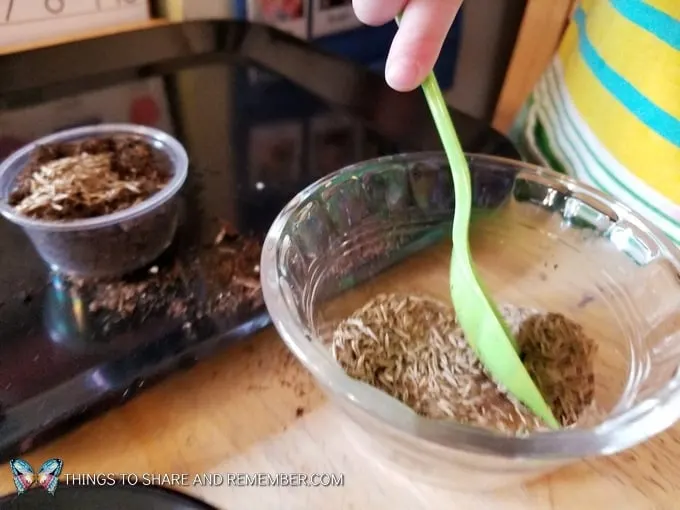
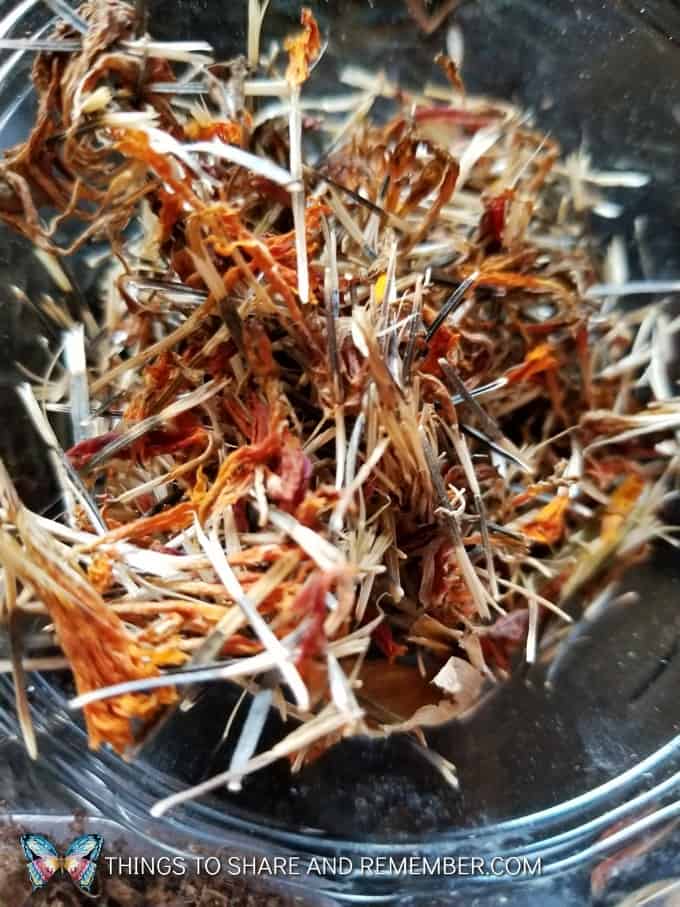
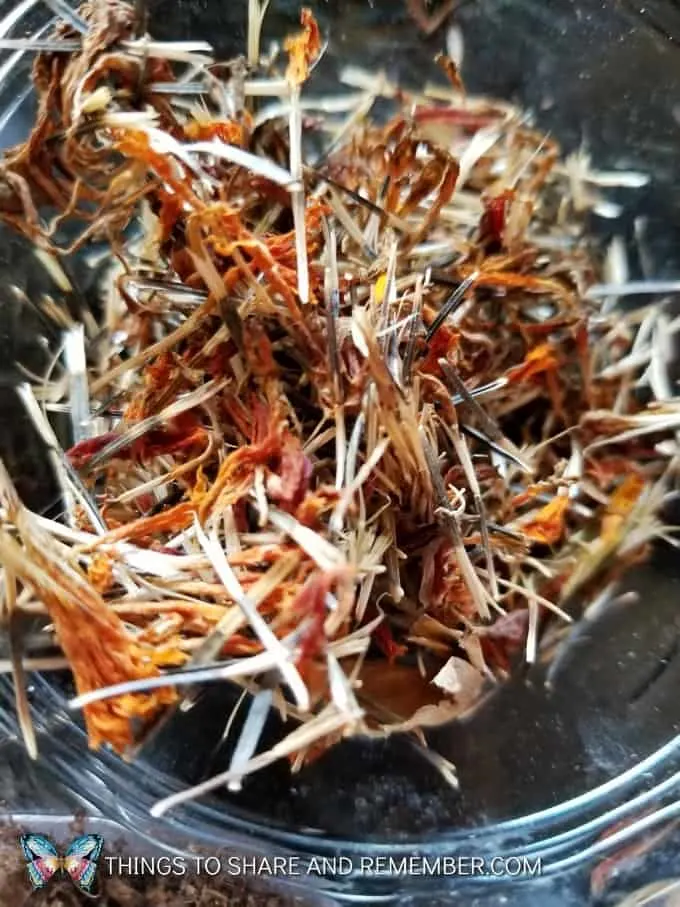
My group was so excited to do this little project. Everyone was visibly excited and engaged in this activity from Experience Curriculum– simple planting grass seeds in a small cup. It was over much too quickly so we also planted a larger pot of marigold seeds using seeds I had saved from our flowers last year. Most of the children are able to remember the orange flowers we had in our planter last year so this was a meaningful cycle for them to understand the seeds could be saved and planted again.
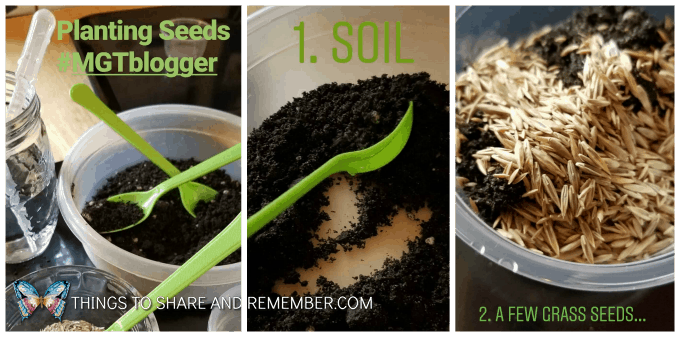
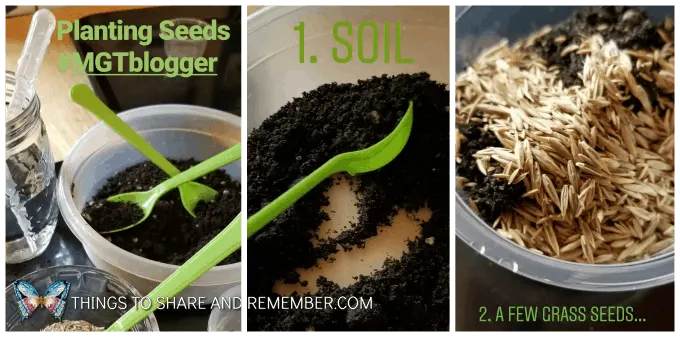
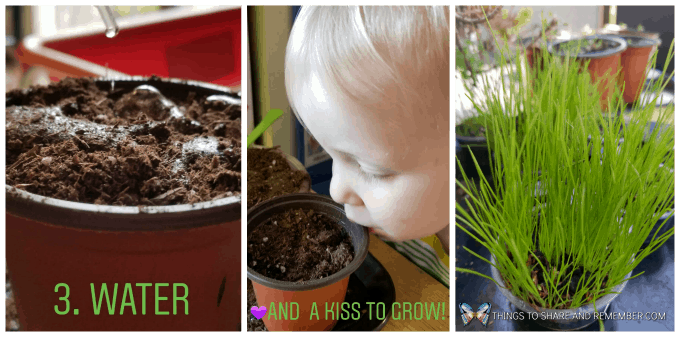
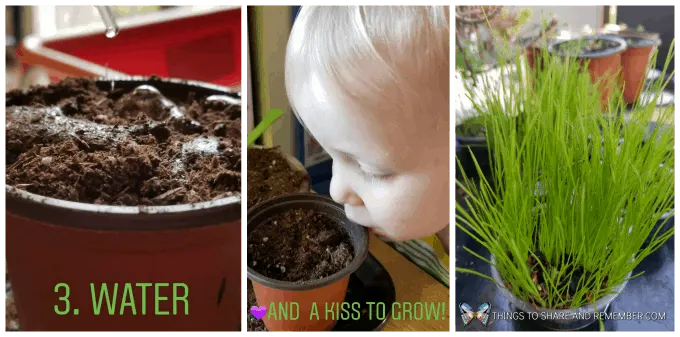
I set out two trays and worked with two children at a time to reduce the chaos and the mess! I’m not sure why we didn’t do this outdoors but it may have been rainy since we had many of those days this May…
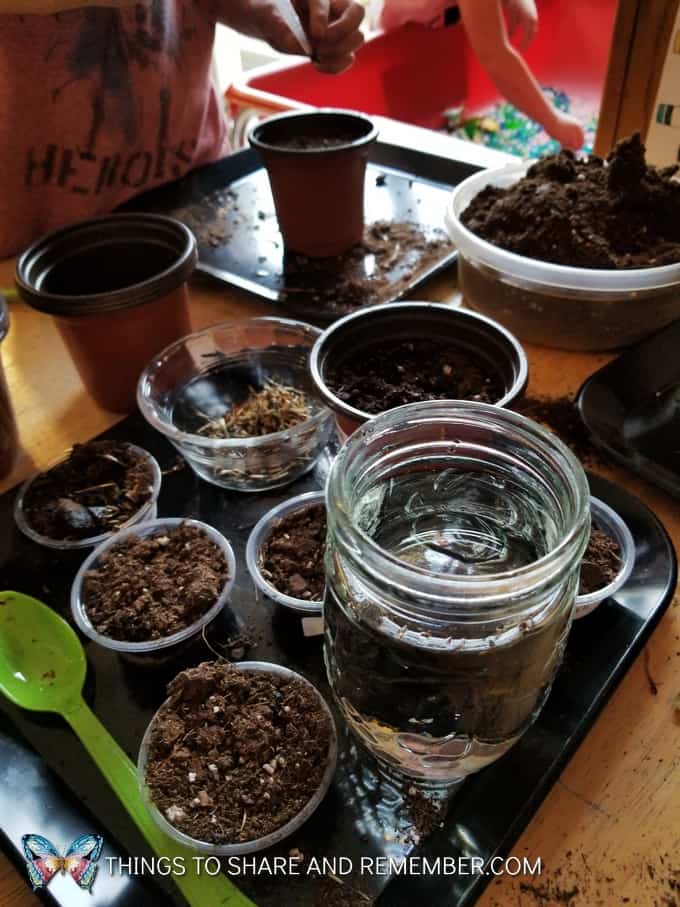
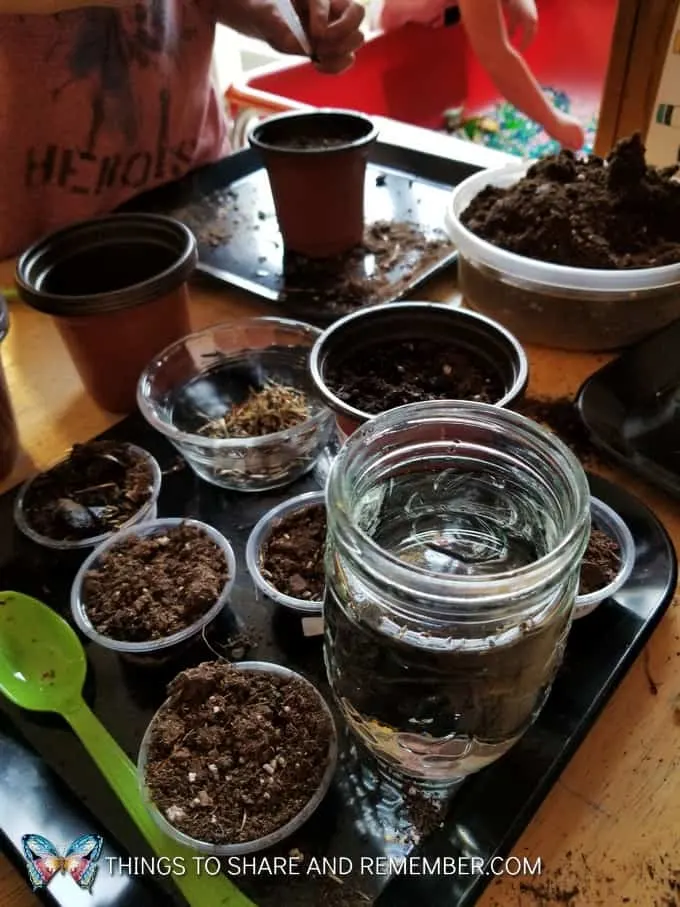
They were anxious to get started and you could see their little eyes taking in all the supplies and their minds processing what to do first and next, which resulted in their hands quickly.
Asking Questions and Prompting Learning Through Conversation
In an effort to slow down the process so it could be done appropriately and meaningfully, I asked them to identify the items we would be using.
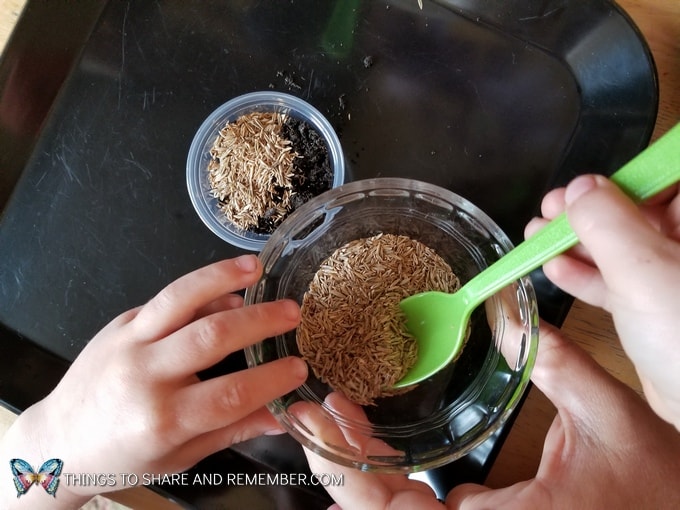
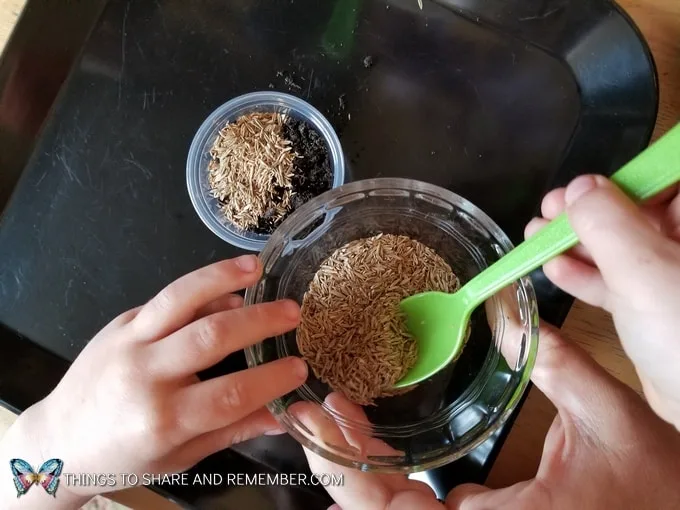
Then other questions like, “What does a seed need to grow?” “What should we do first?”
“Is that enough soil?”
“How many seeds should we plant?”
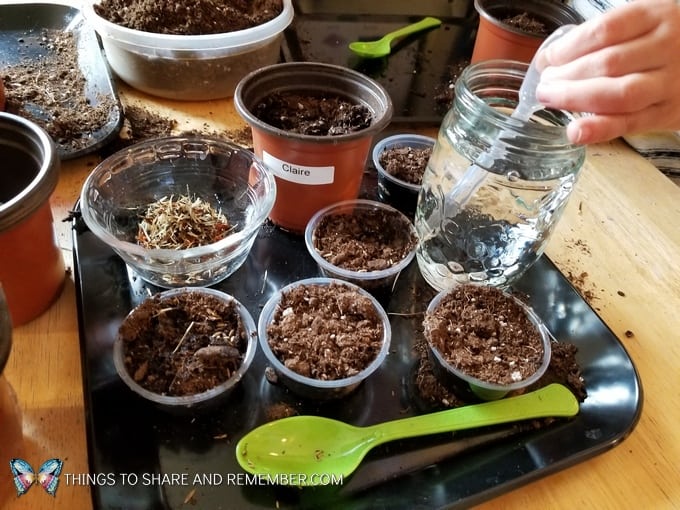
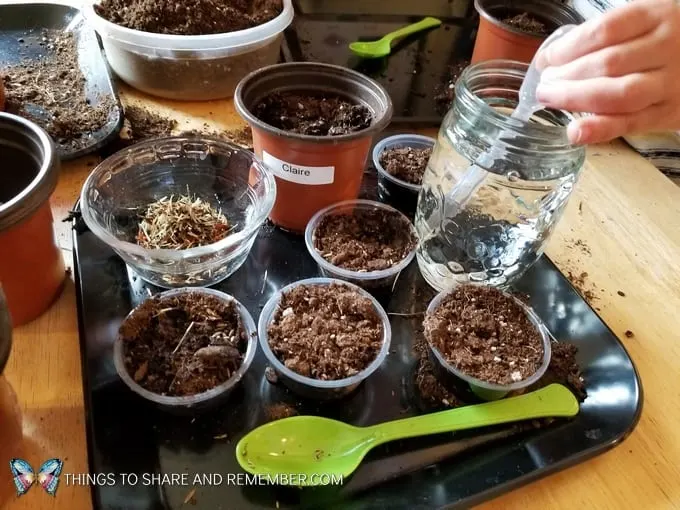
Some used the spoons and some used their hands. It’s important to offer tools and be flexible. It all works!
👉TIP: Kids love the sensory aspect of gardening! Try making a Garden Dirt Sensory Bin
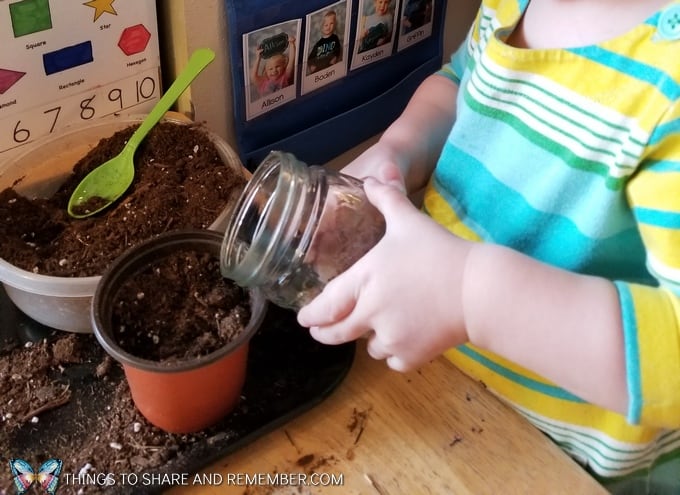
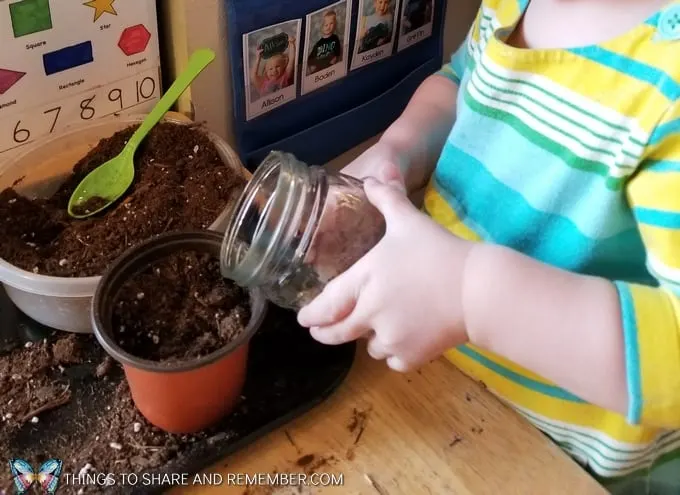
This little one was frustrated with the time it was taking to squeeze the pipette and water her seeds so she picked up the jar and poured. Great!
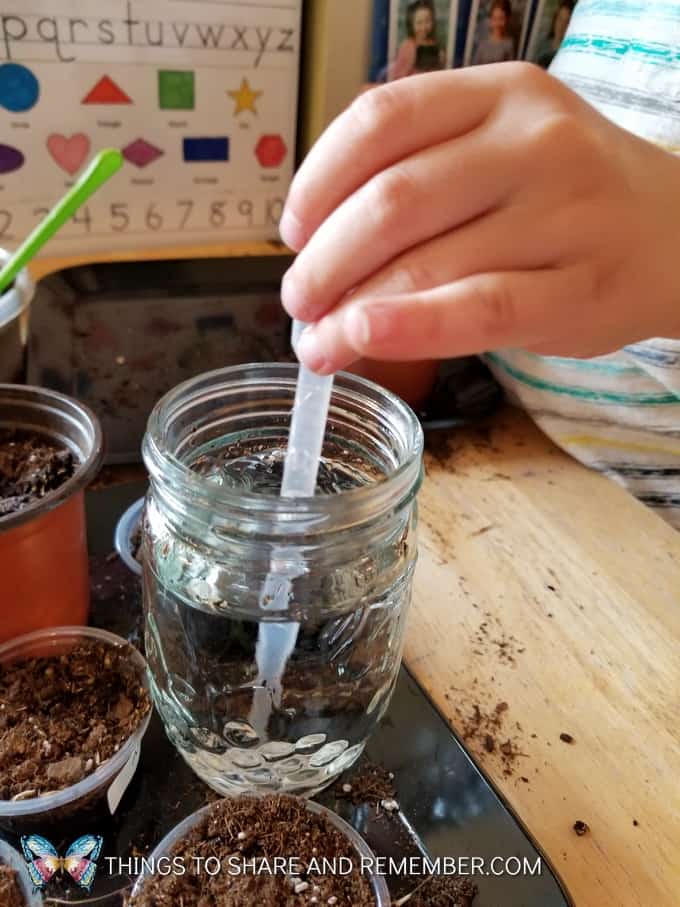
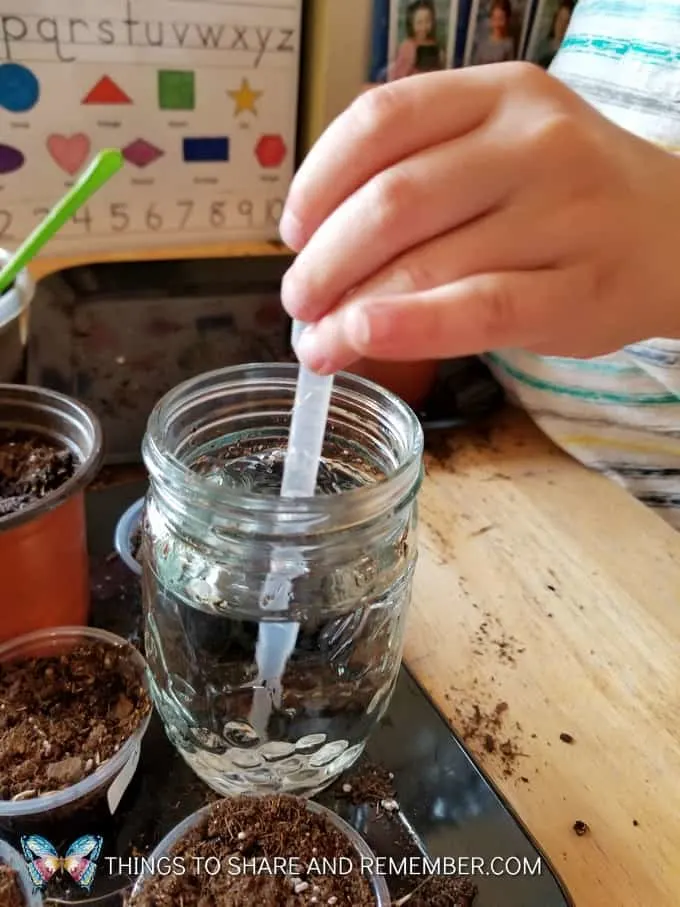
The pipettes for watering slows down the process and prevents the flooding of the seeds plus works on the fine motor skills we need practice with.
Comparing Types of Seeds
We compared the grass seeds and marigold seeds. Marigold flower seeds are colorful like the blooms. For more seed activities, try our Sorting Seeds Nature trays or Seed Mosaics.
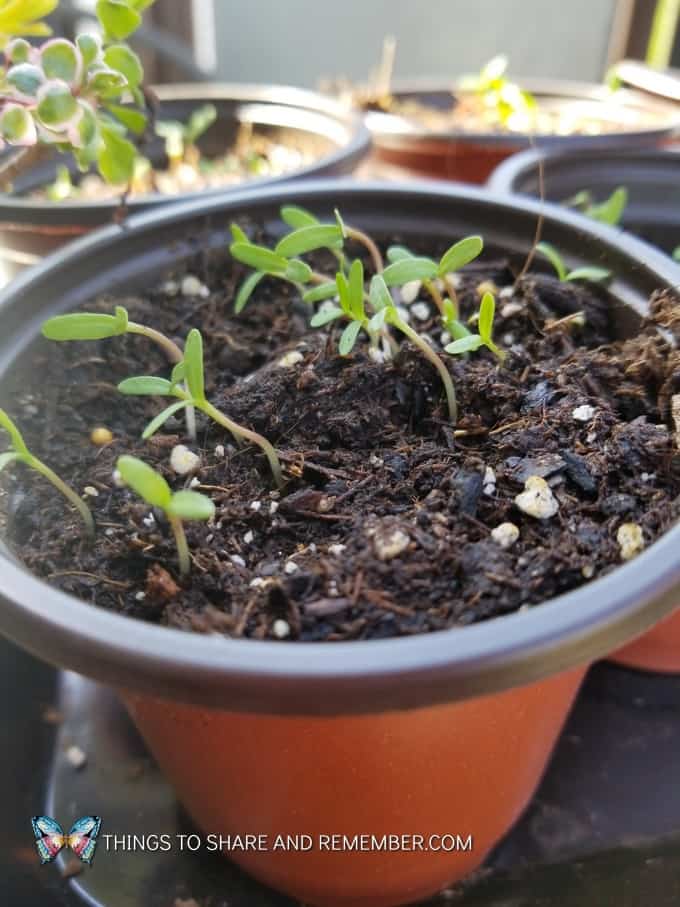
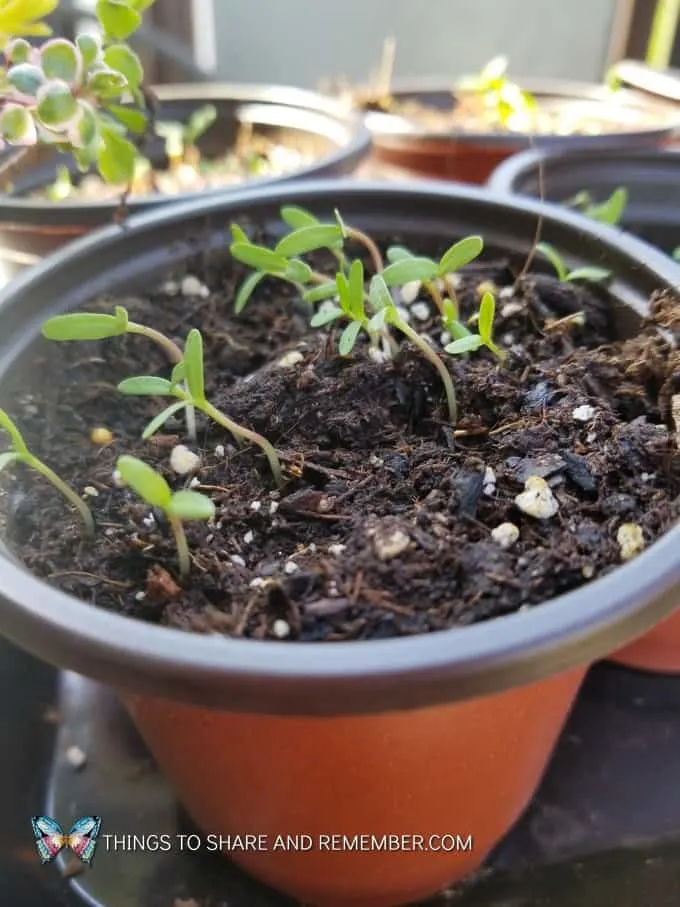
It didn’t take long to see tiny sprouts! Marigolds to grow but that will be fun to watch too. Every day we check to see if they need to be watered.
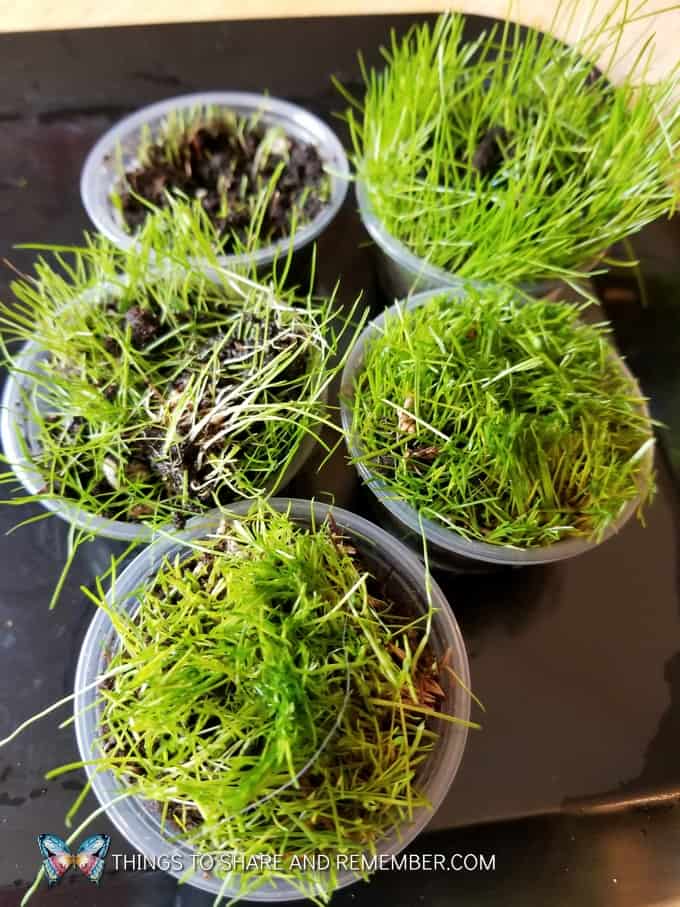
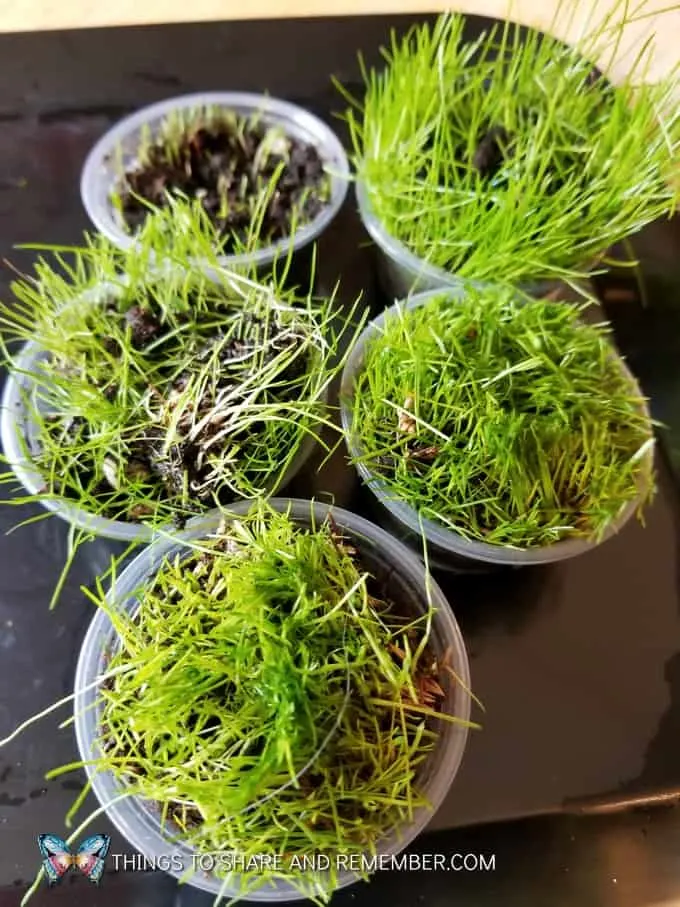
The grass grew quickly and soon needed to be cut. That’s the fun part!
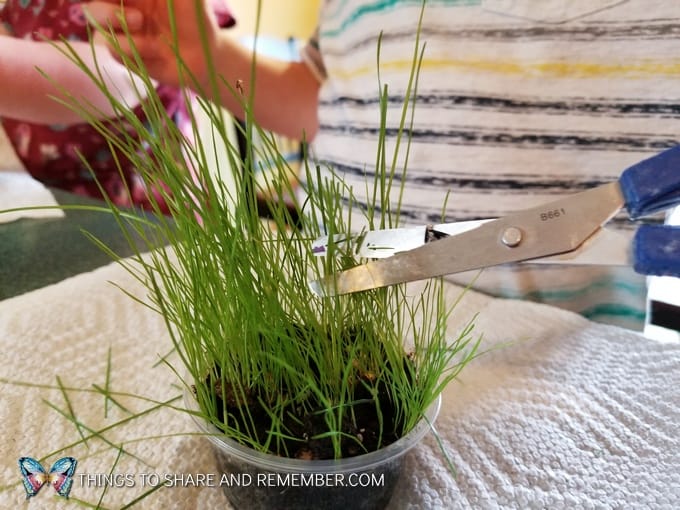
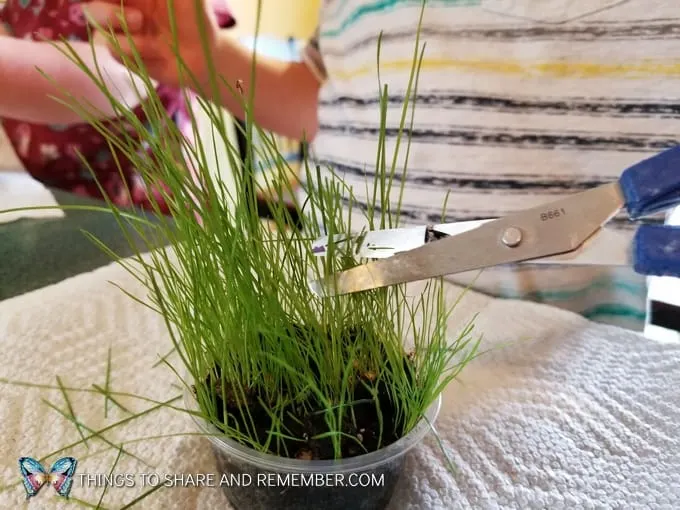
For some reason, this one didn’t grow as much. He certainly had enough seed in it! Maybe this was the one that got dumped and the seeds ended up all mixed in? That’s part of the learning process in planting seeds in preschool. It’s on going learning through a little seed planted in soil that we can watch and observe for many days and weeks to see what happens.
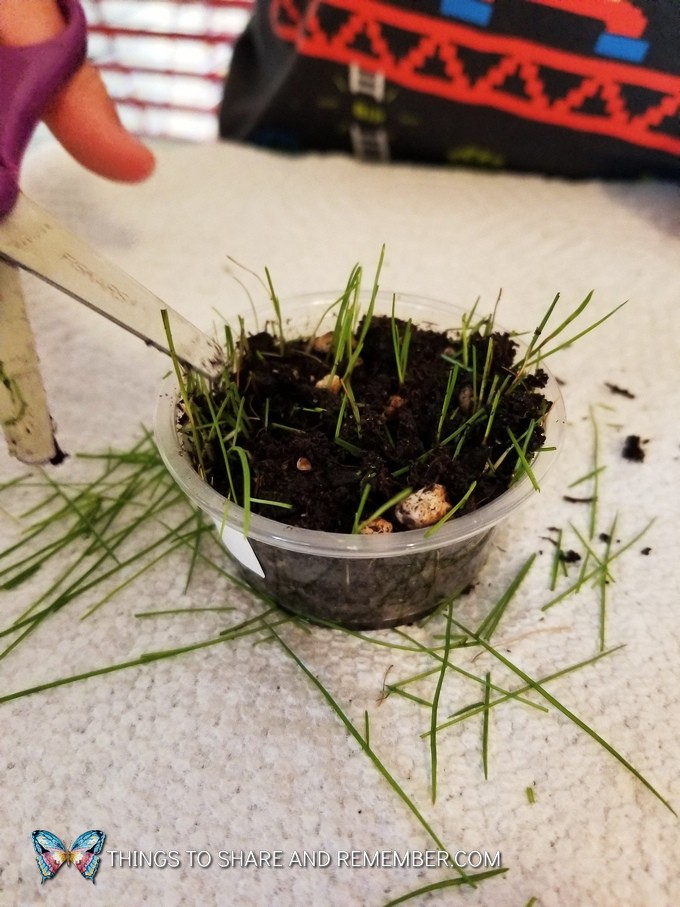
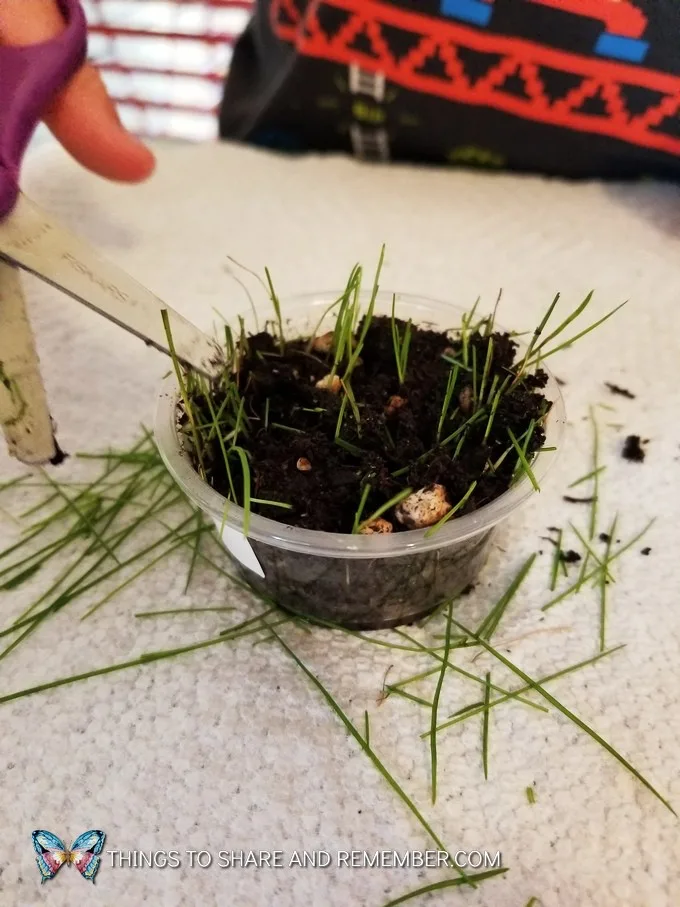
He helped the younger ones who needed assistance cutting. We hope the grass grows again so we can cut it again!
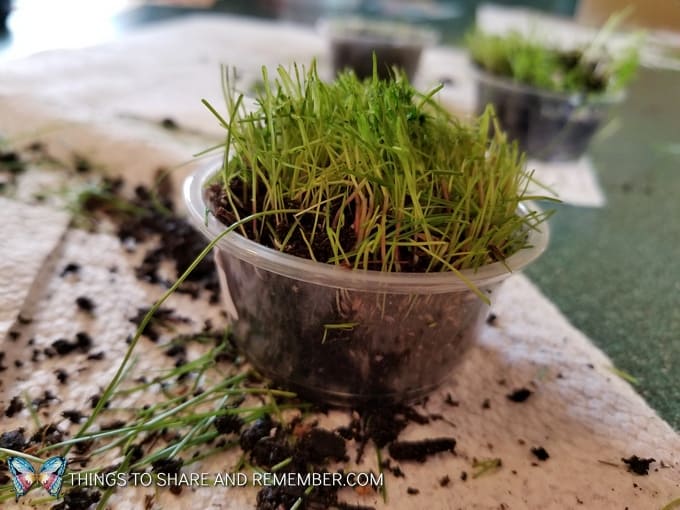
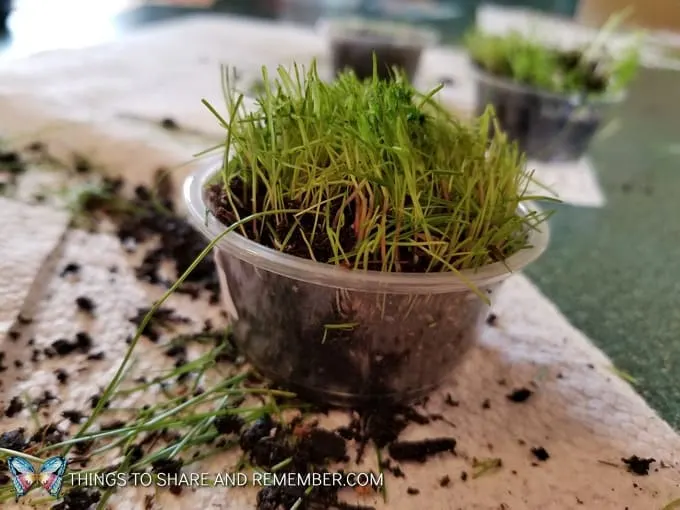
Such a fun sensory and fine motor experience! Cut grass smells good.
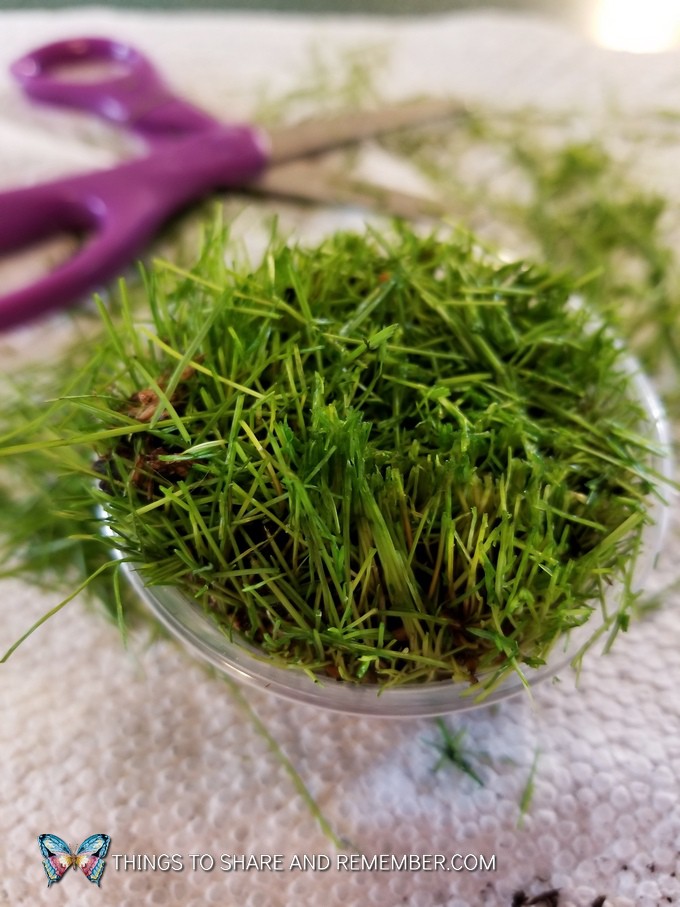
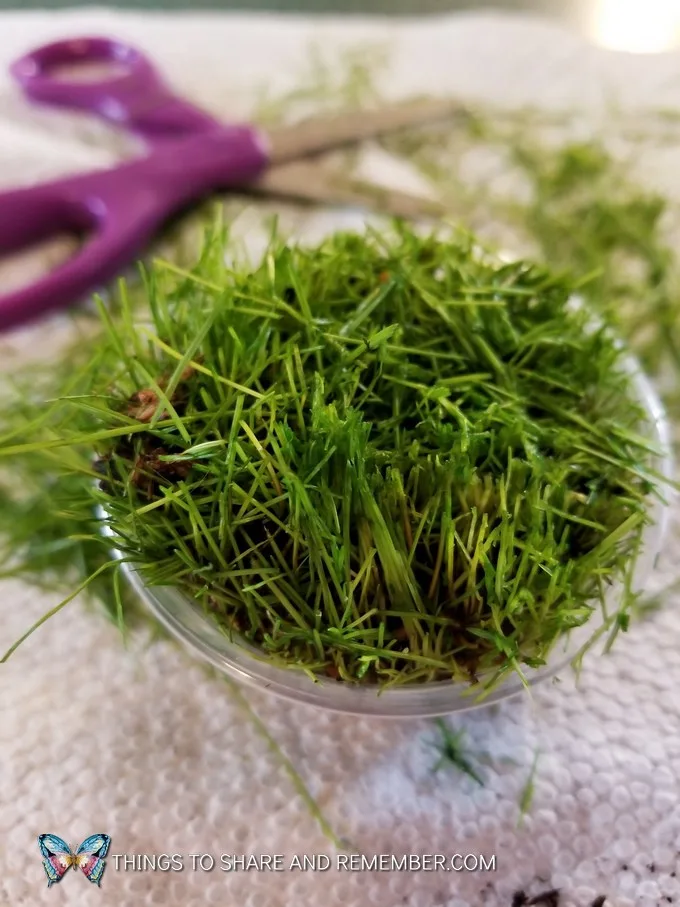
Now we wait for the grass to grow long again.
Add Literacy & Math to Your Planting Theme
These small additions turn a simple activity into a full learning experience. Planting seeds easily connects to other learning areas:
- Count seeds as you plant
- Measure plant growth over time
- Match seed packets by type
- Write or trace plant-related words
Books to Pair with Planting Seeds
Books help children visualize growth and reinforce vocabulary. Add meaningful read-alouds to deepen understanding:
- Plant the Tiny Seed by Christie Matheson
- The Tiny Seed by Eric Carle
- From Seed to Plant by Gail Gibbons
Tips for Success in the Classroom
- Choose fast-growing seeds like beans or grass
- Expect mess—it’s part of the learning
- Use clear containers for observation
- Label each child’s plant
- Keep routines simple and consistent
Even small successes, like the first sprout, feel exciting and meaningful.
Make Learning Visible
One of the most valuable parts of planting seeds in preschool is documenting the process.
Try:
- Taking photos of growth stages
- Recording children’s words and predictions
- Displaying plants alongside drawings
This helps children revisit their learning and see progress over time.
simranecejourney
Thursday 1st of October 2026
[…] Stacy. (2018, May 26). Planting seeds in preschool [Photograph; Figure 3]. Things to Share & Remember. https://www.thingstoshareandremember.com/planting-seeds-in-preschool/ […]